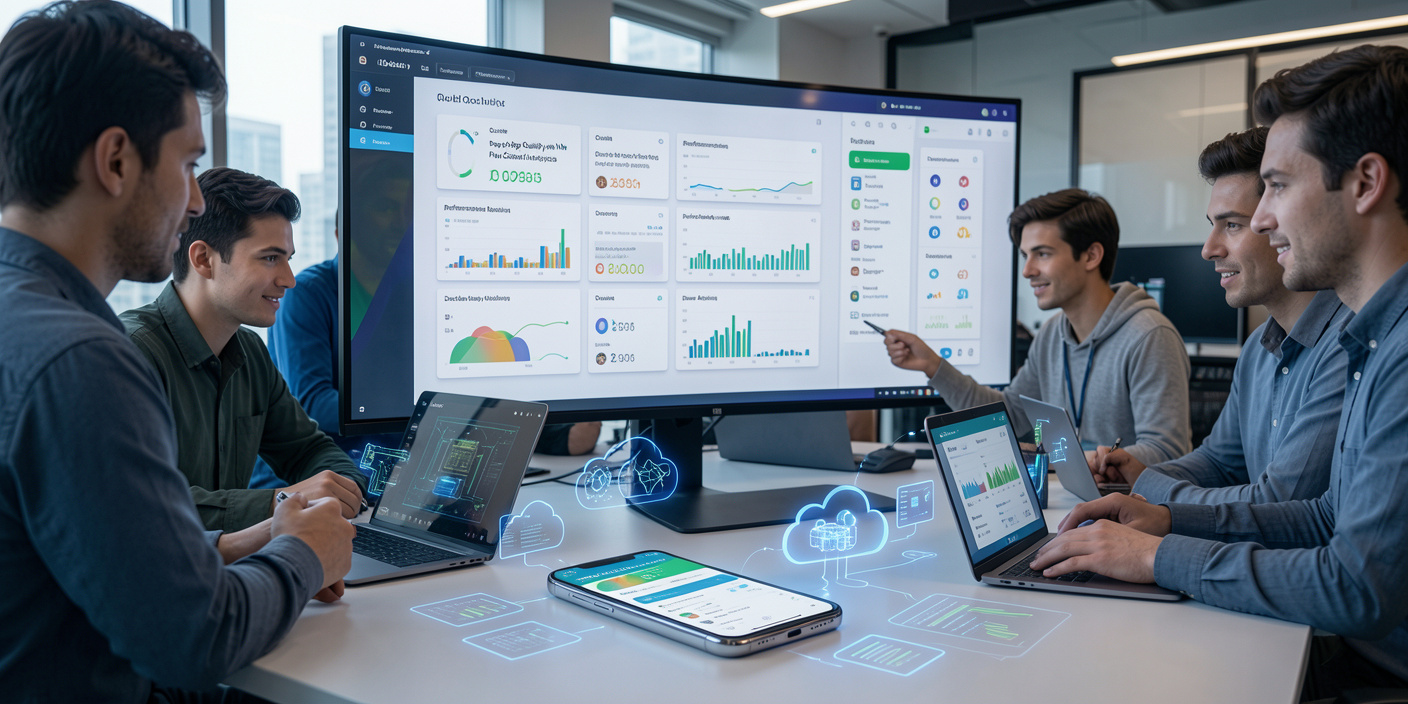
Building a successful mobile application involves much more than writing code and publishing it to an app store. Developers need to understand how applications perform, how users experience them, and where technical problems affect engagement.
Google Play Console provides developers with a range of insights and analytics that can help answer these questions. By examining performance information alongside user behavior and technical signals, development teams can identify opportunities to improve applications.
Consequently, developers can move from simply reacting to problems toward making more informed product decisions. This shift is particularly important as mobile applications become more sophisticated and competition for user attention increases.
Why Play Console Insights Matter
App quality is closely connected to user trust. An application that crashes frequently, responds slowly, or creates confusing experiences can quickly lose users.
Play Console insights can provide developers with information about application performance, stability, acquisition, engagement, and other important areas. Therefore, teams can use this information to understand what may be affecting users after an application is released.
Moreover, analytics can reveal patterns that may not be obvious during development. An application may perform well in internal testing while encountering different conditions across thousands of devices and network environments.
Understanding App Performance Through Data
Data can transform the way development teams approach application improvement. Instead of relying entirely on assumptions or isolated user reports, teams can examine measurable patterns.
For example, performance data can help identify whether certain versions, devices, or user environments experience more technical problems. As a result, developers can prioritize improvements based on evidence rather than guesswork.
Technology insights increasingly emphasize the importance of observability and analytics across the software lifecycle. Mobile development follows the same principle because application quality continues to evolve after launch.
Stability and User Experience Go Together
Technical stability has a direct influence on user experience. Crashes, freezes, slow loading, and unexpected behavior can create frustration even when an application’s core functionality is useful.
However, improving stability requires more than fixing individual bugs. Developers need to understand where problems occur, how frequently they happen, and which users are affected.
Additionally, teams can combine technical analytics with qualitative feedback. When performance information and user feedback are considered together, developers can develop a clearer understanding of the problems that matter most.
Analytics Can Improve Product Decisions
Analytics are not only useful for engineers. Product managers, designers, marketers, and business leaders can also benefit from a better understanding of application behavior.
Meanwhile, product teams can use engagement and acquisition information to evaluate whether new features are helping users achieve their goals. This can support more informed decisions about future development.
Marketing trends analysis also shows how important data has become in understanding digital audiences. Mobile applications generate valuable behavioral signals that can help businesses understand how users discover, adopt, and continue using digital products.
Connecting Technical Data With Business Goals
A strong application strategy should connect technology performance with broader business objectives. Improving an application may increase retention, strengthen customer satisfaction, and support revenue growth.
Therefore, Finance industry updates and technology planning increasingly overlap. Businesses need to understand how investments in application quality can contribute to measurable commercial outcomes.
Similarly, Sales strategies and research can benefit when applications provide better experiences. If a mobile application is part of the customer journey, technical reliability can influence trust and ultimately affect purchasing decisions.
Supporting Development Teams
Application analytics can also influence how technology teams work. Developers can use performance information to prioritize technical improvements, while product teams can use behavioral data to refine roadmaps.
HR trends and insights are relevant here because organizations need professionals who can work across development, analytics, product management, and user experience. As digital ecosystems become more complex, collaboration between specialized teams becomes increasingly important.
Consequently, companies may need to invest in both technology and skills development. Better tools are most effective when teams understand how to interpret the information they provide.
The Importance of Continuous Improvement
Publishing an application should not represent the end of the development process. Instead, it marks the beginning of a continuous improvement cycle.
Developers can monitor performance, study user behavior, evaluate releases, and identify areas for refinement. Additionally, new operating systems, devices, security requirements, and user expectations can create new challenges over time.
IT industry news continues to highlight how quickly the mobile ecosystem evolves. Applications therefore need development strategies that can adapt rather than relying on one time optimization.
Using Insights Across the App Lifecycle
The greatest value comes when analytics are integrated into the entire application lifecycle. Developers can consider performance information during planning, testing, release management, and post launch optimization.
Furthermore, teams can compare application performance over time to understand whether changes are producing meaningful improvements. This creates a feedback loop where development decisions are continuously informed by real world evidence.
As a result, Play Console insights can become part of a broader engineering culture focused on reliability, experimentation, and user satisfaction.
The Future of Mobile App Analytics
Mobile analytics will become increasingly important as applications incorporate artificial intelligence, cloud services, connected devices, and more sophisticated personalization.
Future development environments are likely to combine technical monitoring with deeper behavioral insights. Consequently, developers may gain a more complete understanding of how application architecture, performance, and user experience interact.
The organizations that benefit most will be those that treat analytics as a strategic capability rather than simply a reporting function.
Practical Insights for Better App Quality
The most important lesson is that app quality should be measured continuously. Developers can use Play Console insights and analytics to identify performance challenges, understand user behavior, and prioritize improvements based on real evidence.
However, analytics should not replace human judgment. Teams still need to understand user expectations, business objectives, technical constraints, and product strategy. When these perspectives work together, data becomes a powerful tool for continuous improvement.
Ultimately, better application quality comes from a cycle of measurement, learning, testing, and refinement. By using available insights effectively, development teams can create applications that remain reliable, competitive, and valuable as the digital ecosystem changes.
Explore iTechInfoPro.com for expert insights on technology, digital transformation, software development, and emerging IT trends.