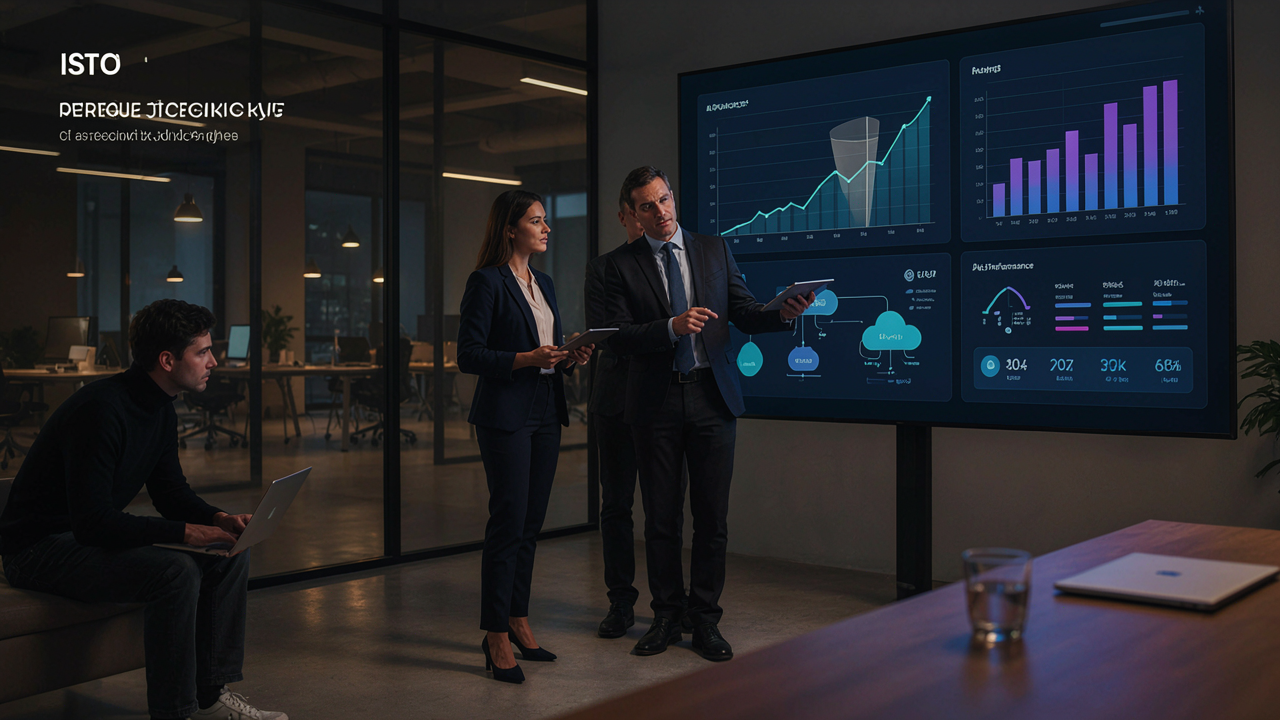
Artificial intelligence has moved from an experimental technology to a serious business priority. Across industries, companies are increasing investments in AI tools, infrastructure, data platforms, automation, and intelligent applications. However, higher investment does not automatically translate into better business outcomes.
The central challenge is becoming increasingly clear. Organizations know they need AI, yet many are still uncertain about where it should be deployed, how success should be measured, and whether their investments are delivering meaningful returns.
As a result, AI spending is creating both opportunity and uncertainty across the evolving IT ecosystem.
Why Businesses Are Investing in AI
The growing interest in artificial intelligence is closely connected to digital transformation. Businesses want to automate repetitive work, improve customer experiences, accelerate analysis, and help employees make faster decisions.
Meanwhile, the rapid development of generative AI has expanded expectations. Employees can now create content, analyze information, write software, summarize documents, and interact with data using natural language.
Consequently, business leaders are under pressure to determine how these capabilities can create measurable value. Technology insights increasingly show that successful AI adoption requires more than purchasing another platform or adding an AI feature to an existing application.
More Investment Does Not Guarantee Better Results
One of the biggest problems facing organizations is the gap between experimentation and measurable impact.
A company may launch several AI projects and still struggle to identify which initiatives actually improve revenue, productivity, customer satisfaction, or operational efficiency. Moreover, different departments may adopt separate AI solutions without a unified strategy.
This creates an environment where spending can increase faster than organizational understanding.
In contrast, companies that connect AI projects to specific business objectives are more likely to understand whether their technology investments are working. They can define measurable outcomes before implementation rather than trying to justify an investment after deployment.
The ROI Question Is Getting Harder
Return on investment remains one of the most important questions surrounding artificial intelligence.
Traditional software investments often have relatively clear licensing and implementation costs. AI initiatives can be more complicated because expenses may include computing infrastructure, data preparation, model usage, integration, security, employee training, and ongoing monitoring.
Additionally, productivity improvements can be difficult to measure. If an employee completes a task faster with AI, the benefit may not immediately appear as additional revenue.
Therefore, organizations need broader performance measures that consider productivity, quality, speed, employee experience, customer outcomes, and operational resilience.
AI Is Changing the IT Ecosystem
The impact of AI extends beyond individual applications. It is influencing cloud infrastructure, cybersecurity, software development, data management, networking, and enterprise architecture.
IT teams are increasingly expected to support AI workloads while maintaining reliability and security. At the same time, developers are exploring AI assisted programming and automated testing, while cybersecurity teams are preparing for both AI powered attacks and AI supported defense.
This evolution is also reflected in current IT industry news, where infrastructure providers, software companies, and technology startups continue to compete for a larger role in the AI economy.
People Remain Central to AI Transformation
Technology alone cannot deliver successful transformation. Employees need the knowledge and confidence to use new systems effectively.
HR trends and insights increasingly point toward continuous learning as organizations introduce new digital capabilities. AI adoption can change job responsibilities rather than simply eliminate tasks, which means workforce development becomes an important part of technology strategy.
For example, employees may spend less time searching for information and more time reviewing AI generated recommendations. Similarly, managers may focus less on manual reporting and more on interpreting business intelligence.
As a result, organizations that invest in people alongside technology can create stronger foundations for long term AI adoption.
AI Is Reshaping Business Functions
The influence of AI is spreading across almost every major business function.
Sales teams can analyze customer interactions and identify opportunities more efficiently. Sales strategies and research can increasingly incorporate predictive insights, customer signals, and automated analysis.
Marketing teams are also using AI to understand audiences, generate content, personalize experiences, and analyze campaign performance. Marketing trends analysis increasingly focuses on how intelligent systems can support faster experimentation while allowing marketers to concentrate on strategy and creativity.
Finance departments can similarly use AI for forecasting, anomaly detection, document processing, and risk analysis. However, Finance industry updates continue to highlight the importance of governance, accuracy, and human oversight when technology influences financial decisions.
Guesswork Can Become an Expensive Problem
The biggest risk may not be investing too much in AI. It may be investing without a clear reason.
Organizations sometimes adopt technology because competitors are using it or because AI has become a boardroom priority. Although staying competitive matters, copying another company’s strategy does not guarantee the same results.
Every business has different data, customers, processes, skills, and operational challenges. Therefore, AI initiatives should begin with a clear understanding of the problem being solved.
A successful strategy asks what needs improvement first and then determines whether AI is actually the right solution.
Building a Smarter AI Strategy
The next stage of AI adoption will likely be less about experimentation and more about accountability.
Businesses will need to identify high value use cases, establish realistic performance measures, strengthen data quality, and prepare employees for changing workflows. Additionally, leaders will need clear governance frameworks covering privacy, security, accuracy, and responsible AI use.
Meanwhile, technology teams will have to balance innovation with reliability. Moving quickly is valuable, but moving quickly without understanding risks can create technical debt and operational problems.
This is where practical technology insights become particularly valuable for decision makers navigating an increasingly complex IT environment.
Practical Insights for the Future
The future of AI investment will not simply belong to organizations that spend the most. It will favor companies that understand where technology can produce meaningful results.
Businesses should connect every major AI initiative to a measurable objective, regularly evaluate its performance, and remain willing to change direction when expected benefits do not appear.
Furthermore, organizations should treat employee education as part of AI implementation rather than an optional addition. Strong data practices, responsible governance, and clear ownership can also reduce uncertainty as AI becomes more deeply integrated into everyday operations.
Ultimately, AI spending should be viewed as a strategic decision rather than a race. The organizations that combine ambition with measurement, experimentation with discipline, and innovation with human judgment will be better positioned for the next phase of digital transformation.
Explore More Technology Insights
Discover practical technology perspectives, emerging trends, and expert analysis that can help your organization navigate the rapidly changing digital landscape.
Visit iTechInfoPro.com for more technology insights and industry focused coverage designed for today’s technology professionals.
Source : wsj.com