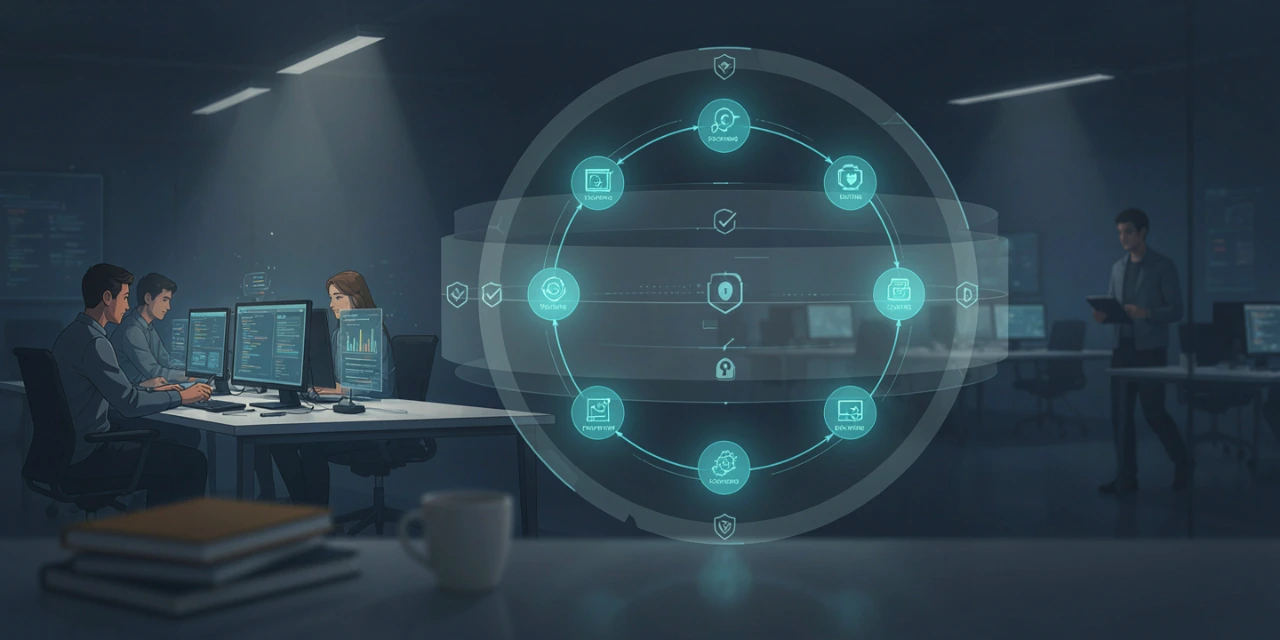
Artificial intelligence is rapidly changing how software teams plan, build, test and deliver applications. However, the biggest challenge is no longer simply giving developers access to AI tools. The emerging challenge is creating systems where AI agents can work continuously while remaining connected to organizational knowledge, engineering standards and human oversight.
Atlassian is addressing this shift with new capabilities designed to bring governed agent loops into the AI native software development lifecycle. The company announced the initiative on September 10, 2026, as part of its broader Jira strategy for AI powered software development.
According to Atlassian’s 2026 AI SDLC study, 94 percent of engineering leaders surveyed said they were using AI, while only 6 percent reported having systems capable of scaling AI across the complete software lifecycle.
Why Context Matters for AI Agents
AI coding agents can generate code quickly, yet their effectiveness depends heavily on the information available to them. Without knowledge of an organization’s architecture, documentation, coding standards and previous decisions, an agent may produce technically valid work that does not fit the wider project.
Therefore, Atlassian is introducing Code Context through its Teamwork Graph. The system is designed to provide Rovo and coding agents with information across multiple repositories and the wider development environment.
This approach can help agents understand requirements before implementation. Consequently, AI can potentially support activities ranging from assessing backlog ideas and creating implementation plans to bug triage and root cause investigation.
From Individual Prompts to Agent Loops
Traditionally, developers interact with AI through individual prompts. A developer describes a task, receives a response and then decides what to do next. Although this model can accelerate individual activities, it still requires people to manually coordinate many stages of delivery.
Governed agent loops introduce a different model. Instead of waiting for a developer to initiate every interaction, an agent can continuously monitor suitable work and take action when predefined conditions are met.
Atlassian says its upcoming Jira agent loops can scan for well defined and unassigned work items, delegate appropriate tasks to Jira Coding Agent, support execution and testing, and create pull requests for human review.
As a result, project teams can shift their attention from repeatedly initiating routine tasks toward defining intent, establishing guardrails and reviewing outcomes.
Governance Becomes Part of the Workflow
Automation alone is not enough for enterprise software development. As AI agents receive greater access to repositories and workflows, organizations need clear controls over what each agent can see and do.
Atlassian’s Agent Context Controls are designed to let platform teams determine which agents can operate in specific spaces and what information they can access. Meanwhile, its Standards capability allows organizations to define coding requirements and apply them across repositories.
Additionally, AI Review is designed to place an agent on pull requests to check changes against defined standards before human review. This creates another layer of verification within the development process.
The broader technology insights are significant because governance is becoming part of the architecture of AI powered development rather than a separate administrative activity.
Keeping Developers in Control
A major part of the model is maintaining human involvement at important decision points. Atlassian describes a workflow in which developers establish intent and guardrails, agents execute suitable tasks, and developers and product managers review and approve what ultimately ships.
This structure can help organizations balance automation with accountability. Instead of allowing an autonomous system to independently determine what enters production, teams can establish approval points around important decisions.
Furthermore, the approach can make AI adoption more structured for larger engineering organizations where multiple teams work across different repositories and applications.
Measuring the Impact of AI Development
Another challenge for organizations is understanding whether AI is actually improving software delivery. Simply counting the number of AI generated lines of code does not provide a complete picture of productivity or quality.
Atlassian is introducing measurement capabilities through DX for Agentic Development and a Jira Agent Usage Dashboard. These tools are intended to provide visibility into AI adoption, throughput, quality, cost and agent usage.
Consequently, engineering leaders can examine AI investment alongside delivery outcomes rather than relying only on anecdotal improvements.
This is also relevant to Finance industry updates because technology leaders increasingly need measurable evidence when evaluating investments in AI infrastructure and software tools.
Implications Across the IT Ecosystem
The shift toward governed AI development extends beyond engineering departments. HR trends and insights may increasingly focus on how organizations train developers and managers to collaborate with AI systems.
Similarly, Sales strategies and research can be affected when software teams deliver customer facing features more rapidly. Marketing trends analysis can also become connected to engineering workflows as organizations accelerate the development of digital experiences.
Meanwhile, IT industry news continues to reflect a broader transformation in which AI is moving from an individual productivity tool toward an organizational operating layer.
What Comes Next for AI Native Development
The availability of these capabilities suggests that software development is moving toward a model where AI agents can participate across more stages of the lifecycle. However, scaling that model will require reliable context, clearly defined permissions, measurable outcomes and appropriate human review.
Atlassian says Code Context is gradually rolling out to paid customers through open beta, while Agent Loops, Standards and AI Review are in private early access. Agent Context Controls and the Agent Usage Dashboard are expected to become generally available to paid Jira customers in the coming months.
Therefore, organizations exploring AI native development should focus not only on what agents can produce, but also on how those agents are governed, monitored and integrated with existing workflows.
Insights for the Future of Software Development
The move toward governed agent loops reflects a broader transition from AI assistance toward AI orchestrated software delivery. The important question is increasingly how organizations can allow agents to perform meaningful work without losing visibility and control.
For technology leaders, a practical starting point is to establish clear requirements for agent access, documentation, coding standards, testing and human approval. Moreover, organizations should measure quality, delivery speed, cost and security alongside AI adoption.
As the IT ecosystem continues to evolve, successful AI adoption will depend on combining automation with context, governance and accountability. Governed agent loops represent one approach to building that foundation while keeping humans involved in important software delivery decisions.
Explore more expert technology insights, digital transformation news and emerging IT trends on iTechInfoPro.com.
Source : atlassian.com