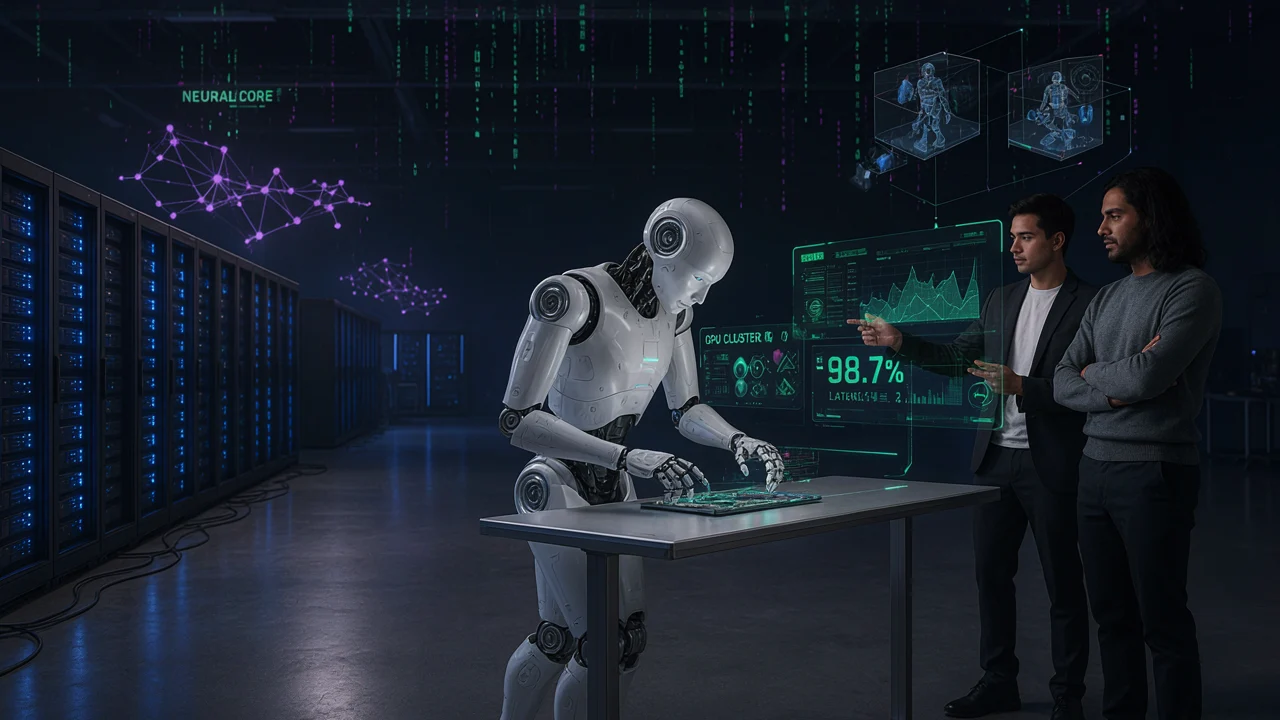
Robotics is entering a new phase as artificial intelligence moves beyond screens and software into physical environments. Skild AI is contributing to this shift with its S1 robot foundation model, trained on NVIDIA infrastructure to help robots learn tasks from video demonstrations.
The development reflects a broader transformation in robotics. Instead of relying entirely on task specific programming, S1 is designed to interpret a single video demonstration and apply what it learns to previously unseen tasks. Consequently, the approach could change how businesses train and deploy intelligent robots across industrial environments.
How the S1 Robot Model Learns
Traditional industrial robotics can require new datasets, retraining and validation when factory layouts or product specifications change. S1 takes a different approach by using an operator’s video recording as a prompt.
The model interprets the operator’s intent, identifies objects and understands the order of operations before translating that information into physical robot actions. Moreover, Skild says the system can handle previously unseen tasks lasting up to 10 minutes, including activities such as coffee preparation, pancake making, kit assembly and plant potting.
This approach represents an important development in Technology insights because it moves AI learning closer to real world physical interaction.
Video Demonstrations Could Simplify Robot Training
One of the most notable aspects of S1 is its use of in context learning. Rather than requiring model weight updates or task specific post training for every new activity, the system can use a video demonstration to understand a task.
During testing involving plant potting, Skild reported that an operator recording was transferred into autonomous physical execution in 11 minutes. The company also reported that the model could adapt to moving objects and recover from physical errors.
Furthermore, Skild reported an average per step success rate of approximately 66 percent in multistep evaluations, compared with nine percent for its baseline comparison system. The company estimates that one video demonstration can provide operational utility comparable to around 380 manual training examples.
NVIDIA Infrastructure Supports Physical AI Development
NVIDIA infrastructure plays a central role in the development and training process. Skild uses NVIDIA Isaac Lab and NVIDIA Cosmos technologies to create diverse experiences that help robots learn across different scenarios and hardware configurations.
The training process combines teleoperation, human video, physical simulations and permitted deployment data. Meanwhile, NVIDIA Cosmos is used to transform video into structured information and generate varied training inputs.
NVIDIA Omniverse and Isaac Sim provide virtual environments and synthetic data for testing. In addition, Isaac Lab uses reinforcement learning and the Newton physics engine to model physical interactions such as contact, force, collision and pressure.
From Simulation to Factory Floors
The technology is already being connected to industrial applications. Foxconn, NVIDIA and Skild are deploying the Skild Brain on dual arm manipulators for assembly work involving NVIDIA Blackwell systems.
The demonstrated process includes installing components, securing 16 screws and maintaining the correct execution order while adapting to physical disturbances. Therefore, the project shows how physical AI can move from controlled simulations toward practical manufacturing environments.
This development is particularly relevant to IT industry news because modern industrial systems increasingly combine robotics, edge computing, AI models, sensors and high performance computing.
Physical AI Could Reshape Industrial Automation
Physical AI differs from conventional automation because robots need to understand and respond to changing environments. A traditional automated process may follow a predefined sequence, whereas an intelligent robot can potentially interpret new situations and adjust its actions.
As a result, businesses could eventually deploy robots across more flexible production environments. Manufacturing, logistics, inspection, security and food preparation are already among the sectors connected with Skild’s deployment partnerships. The company reports more than 60 such partnerships.
However, real world deployment still requires careful testing. Physical environments introduce safety, reliability and operational challenges that do not exist in purely digital AI applications.
What Physical AI Means for Business Technology
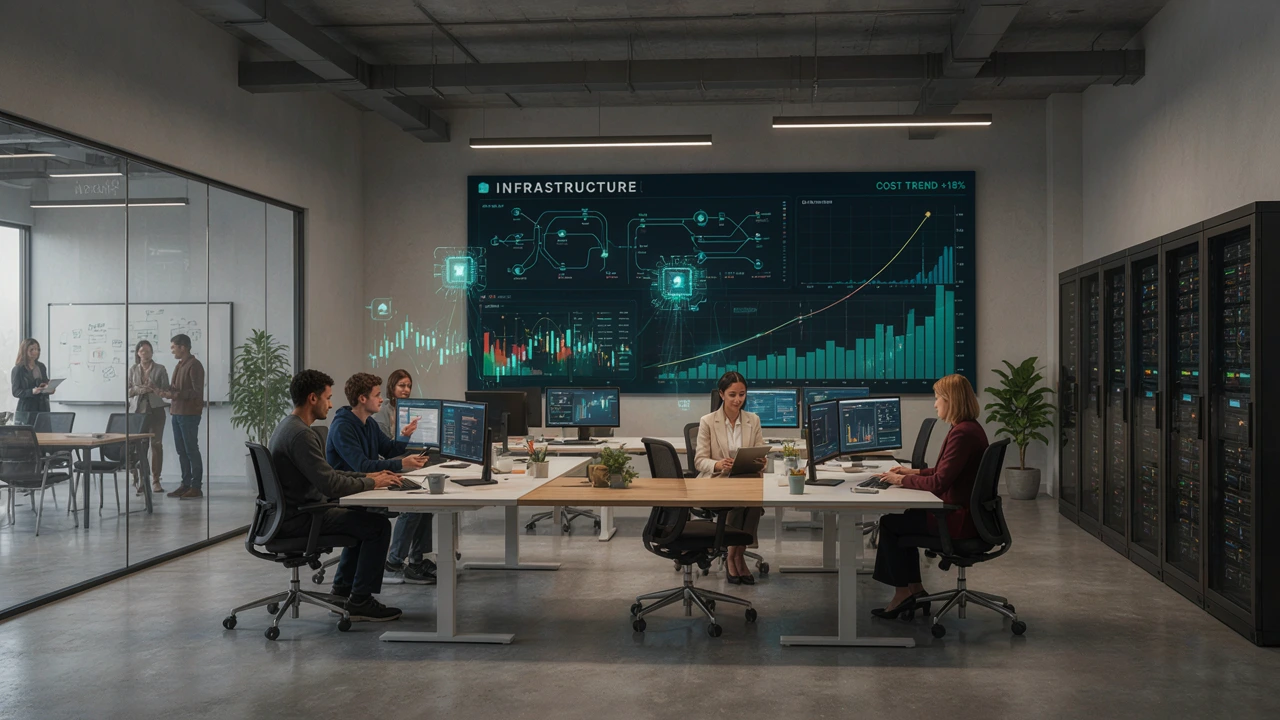
The emergence of physical AI could affect more than robotics departments. Manufacturing leaders may need to rethink automation strategies, while IT teams could increasingly manage the infrastructure supporting intelligent machines.
Similarly, Finance industry updates may increasingly include investment in robotics infrastructure and AI powered industrial systems. HR trends and insights could also evolve as organizations consider how employees will work alongside intelligent machines and what new skills will be required.
Meanwhile, Sales strategies and research could benefit from automation in logistics, inspection and other operational environments. Marketing trends analysis may also increasingly explore how physical AI affects customer experiences and connected products.
Building a More Adaptive Robotics Ecosystem
The combination of video learning, simulation and high performance computing points toward a more adaptive robotics ecosystem. Instead of developing completely separate models for every task, companies could potentially create shared foundation models capable of handling multiple activities.
Moreover, synthetic environments can help developers test unusual situations before deploying systems in physical locations. This can reduce some of the challenges associated with collecting large amounts of real world training data.
NVIDIA and Skild are also engineering GPU accelerated simulation solvers designed to improve calculations involving physical contact, gripping and manipulation. Public availability for external developers is planned, according to the report.
Future Outlook for Physical AI
The S1 model demonstrates how robotics is increasingly moving toward experience based learning. The ability to learn from demonstrations could make robots more adaptable and potentially reduce some of the effort required to program individual tasks.
Nevertheless, businesses will need to evaluate reliability, safety, infrastructure costs and deployment requirements before applying physical AI at scale. Successful adoption will depend not only on advanced models but also on strong simulation, hardware integration, monitoring and human oversight.
The broader lesson for technology leaders is that AI is moving closer to the physical world. As intelligent robotics develops, organizations may need to consider how computing infrastructure, connected devices, automation and AI can work together as part of their digital transformation strategies.
Insights for the Evolving IT Ecosystem
The development of S1 highlights an important shift from robots that simply follow instructions toward systems that can learn from experience and adapt to unfamiliar situations. Video based learning could become an important component of this transition as robotics moves into more complex environments.
For technology professionals, the development is worth watching because it connects AI models, simulation, edge computing, industrial automation and robotics within a single ecosystem. Consequently, physical AI could become an increasingly important area of innovation across manufacturing and other industries.
Stay informed about AI, robotics, digital transformation and emerging technology through expert coverage from iTechInfoPro.com.
Source : iottechnews.com