AI Makes Phishing Attacks Smarter and Harder to Detect as cybercriminals increasingly use artificial intelligence to create convincing messages, imitate trusted communication styles, and target individuals with greater precision. Traditional phishing attacks often contained obvious spelling mistakes, suspicious links, or generic messages. Today, those warning signs are becoming less reliable.
As businesses accelerate digital transformation, employees interact with cloud platforms, collaboration tools, financial systems, and customer applications every day. Consequently, attackers have more opportunities to exploit human behavior. AI gives them the ability to analyze publicly available information and create messages that appear relevant to a specific person or organization.
This shift is becoming an important part of broader technology insights as organizations rethink how cybersecurity should support modern digital operations.
AI Creates More Convincing Phishing Messages
One of the biggest changes is the quality of phishing content. Generative AI can produce professional sounding emails that closely resemble legitimate business communication. Attackers can also create variations of the same message for different targets, making large scale campaigns more personalized.
Moreover, AI can help attackers imitate writing styles, understand organizational terminology, and create realistic scenarios involving invoices, account notifications, recruitment messages, or security alerts. This makes traditional awareness training more challenging because employees can no longer rely only on poor grammar or unusual wording to identify suspicious communication.
For technology teams, this development is particularly important because phishing can become an entry point for credential theft, malware infections, financial fraud, and unauthorized access to business systems.
Personalization Makes Social Engineering More Effective
AI can make social engineering campaigns more targeted by helping attackers organize information about potential victims. Public professional profiles, company websites, social media activity, and previously exposed information can provide useful context.
For example, an attacker may create a message that appears connected to a current business project or a familiar colleague. Similarly, a fraudulent request may be designed around a company’s internal terminology or an employee’s responsibilities.
Therefore, cybersecurity teams need to move beyond simple awareness campaigns. Employees should understand that a message can look professionally written and still be malicious. Verification procedures and identity based security controls are becoming increasingly important.
The Risk Extends Across the IT Ecosystem
The impact of AI enhanced phishing is not limited to cybersecurity departments. Finance teams may face fraudulent payment requests, while HR departments can become targets through fake recruitment communication or employee related requests. Sales teams may encounter fraudulent customer inquiries, and marketing departments can receive deceptive partnership or advertising proposals.
Consequently, phishing should be viewed as an organization wide technology risk rather than a problem belonging to one department. HR trends and insights, Finance industry updates, Sales strategies and research, and Marketing trends analysis increasingly intersect with cybersecurity because digital communication is central to all these functions.
IT industry news is also highlighting how organizations are investing in identity security, employee education, endpoint protection, and automated threat detection to address this changing environment.
Why Traditional Detection Is Becoming Harder
Conventional email security systems can identify known malicious domains, suspicious attachments, unusual sender behavior, and previously reported threats. However, AI assisted attacks can constantly generate new variations, making static detection less effective.
Attackers can also adjust language and message structure rapidly. As a result, security teams need systems capable of analyzing context and behavior rather than relying exclusively on predefined patterns.
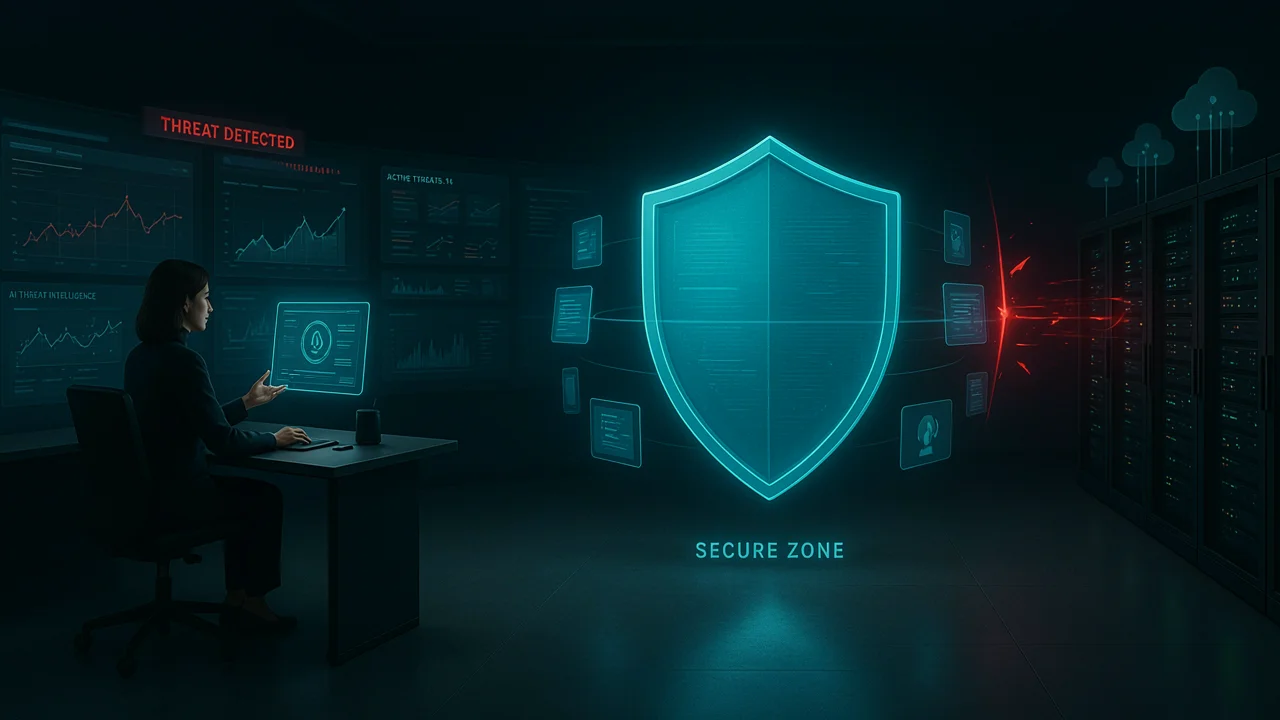
Meanwhile, organizations are increasingly using artificial intelligence themselves to detect unusual login activity, identify suspicious communication patterns, and investigate potential security incidents. This creates an ongoing technology race between attackers and defenders.
Businesses Need Smarter Security Strategies
Organizations can reduce exposure by combining technology with stronger operational processes. Multi factor authentication remains an important layer because stolen passwords alone are less useful when additional verification is required. Identity monitoring, secure access policies, email security, endpoint protection, and employee education can provide additional safeguards.
Moreover, businesses should establish clear procedures for handling sensitive requests. Employees should independently verify unusual payment instructions, password reset requests, confidential file transfers, and unexpected requests for access.
Security teams can also use simulations to help employees recognize modern phishing techniques. Instead of focusing only on obvious fraudulent emails, training should demonstrate realistic scenarios that reflect how employees actually communicate.
AI Will Shape the Next Generation of Cybersecurity
The same technology that makes phishing more sophisticated can also strengthen cybersecurity. AI can help security teams process large volumes of alerts, detect anomalies, identify patterns, and prioritize potential threats. Therefore, the future of cybersecurity will increasingly involve cooperation between human expertise and intelligent security systems.
However, organizations should avoid treating AI as a complete replacement for security professionals. Human judgment remains important when evaluating unusual business situations, investigating incidents, and making decisions involving sensitive information.
As digital transformation continues, businesses will need cybersecurity strategies that evolve alongside emerging technologies. AI Makes Phishing Attacks Smarter and Harder to Detect, but stronger identity controls, continuous monitoring, employee awareness, and intelligent detection can help organizations respond to this changing threat landscape.
Technology Insights for the Future
The growth of AI driven phishing demonstrates a broader lesson for the IT ecosystem. As technology becomes more capable, both opportunities and risks can expand simultaneously. Businesses that continuously update their security practices will be better positioned to manage increasingly sophisticated digital threats.
The future will likely bring more advanced detection systems, stronger identity verification, and greater integration between cybersecurity and everyday business operations. Consequently, organizations should treat security as an ongoing part of digital transformation rather than a one time technology investment.
Explore more expert technology insights and emerging IT industry news on iTechInfoPro.com.
Stay informed about the technologies shaping the future of business and digital innovation.