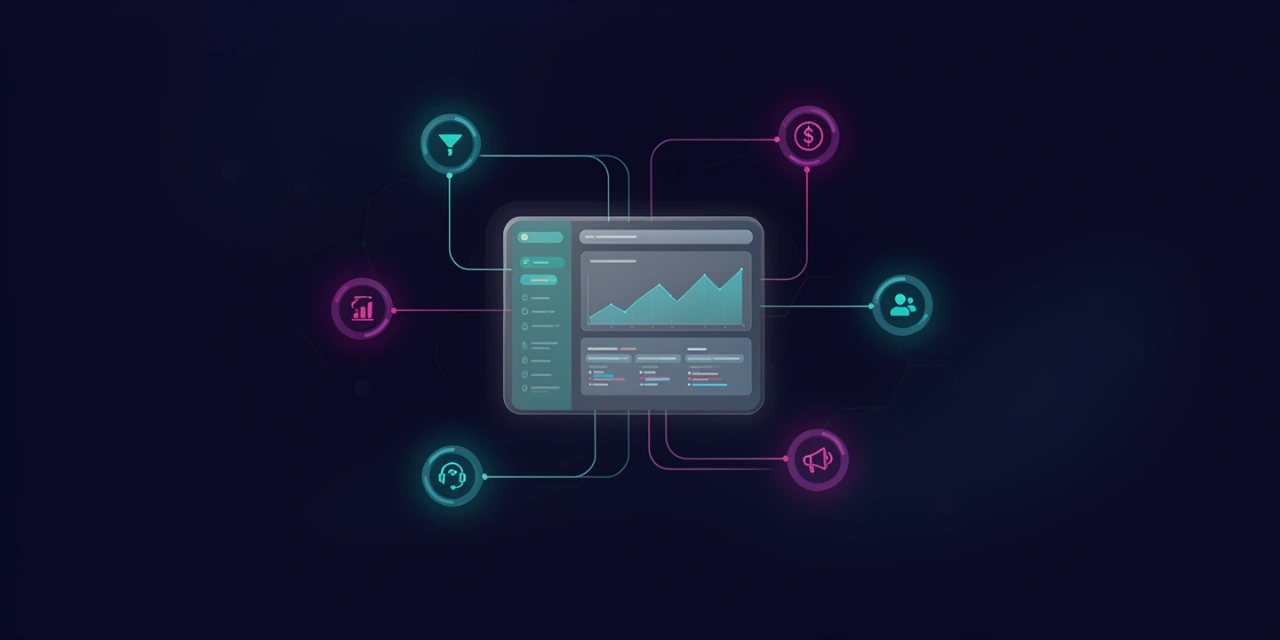
Software as a Service has traditionally been built around a straightforward relationship. Businesses subscribe to a platform, employees use its features, and vendors continuously improve the product. However, artificial intelligence is changing this model by allowing software to perform more work independently.
The question is no longer simply whether AI can improve SaaS products. Instead, businesses are increasingly examining whether AI can change what they purchase, how they pay for software and even whether some applications need to be purchased at all.
Recent technology developments show that AI agents are increasingly capable of working across applications and completing multi step business processes. As a result, the traditional SaaS model is facing a period of significant experimentation.
Traditional SaaS applications generally provide users with tools that help them complete tasks. An employee might use a customer relationship platform to manage leads or a project management application to organize work.
AI agents introduce a different approach. Rather than simply displaying information or providing a feature, an agent can potentially interpret a request, access multiple systems and complete several steps on behalf of a user.
For example, an AI system could analyze customer information, prepare a report, update a business application and notify a sales team. Consequently, the value of software may increasingly depend on the work it can complete rather than the number of features it provides.
This shift is becoming an important part of current IT industry news as enterprise software companies compete to incorporate agentic capabilities into their platforms.
The Traditional SaaS Pricing Model Faces Pressure
For years, many SaaS businesses have relied on subscription or per user pricing. The model is relatively predictable because companies pay according to the number of employees using a platform.
AI creates a different economic structure. If an agent performs work independently, the number of human users may no longer reflect how much value or computing resources a customer receives.
Therefore, vendors are exploring different approaches involving usage, consumption and business outcomes. Research from RBC Capital Markets identifies outcome based pricing as an emerging area of software business model evolution as AI changes the industry.
This does not mean traditional subscriptions are disappearing. Instead, SaaS providers may increasingly combine subscriptions with AI usage or other pricing structures.
AI Is Changing the Build Versus Buy Decision
Another major change involves the decision between purchasing software and developing it internally. AI coding tools can make it easier for organizations to create customized applications for specific workflows.
Recent enterprise research and industry analysis suggest that some organizations are reconsidering SaaS purchases because AI assisted development can reduce the effort required to create internal tools.
However, building software still involves security, maintenance, infrastructure, integration and governance requirements. Consequently, AI does not automatically make custom development more practical for every organization.
Instead, companies may increasingly use a combination of purchased platforms, configurable tools and internally developed applications.
Vertical SaaS Gains New Opportunities
Meanwhile, AI is creating opportunities for specialized SaaS platforms designed around particular industries. Zoho, for example, has been increasing its focus on vertical SaaS as AI changes enterprise software. Industry specific applications can combine specialized workflows with automation and analytics that are difficult to reproduce with a generic platform.
This could be particularly relevant to sectors with specialized compliance requirements or complex operational processes.
For technology leaders, the opportunity is therefore not simply to add an AI assistant to an existing application. Instead, SaaS providers can rethink how their platforms understand industry data, automate workflows and support decision making.
What AI Means for Enterprise Software Buyers
The changing SaaS landscape also affects organizations that purchase enterprise technology. Businesses may increasingly evaluate software according to the amount of work it can automate, the quality of its AI capabilities and how effectively it integrates with existing systems.
Additionally, security and data governance remain important considerations. An AI agent with access to business applications may require carefully managed permissions and monitoring.
Finance industry updates may therefore increasingly include AI related technology costs and software efficiency, while HR trends and insights may focus on workforce adaptation and new skills.
Similarly, sales strategies and research can be influenced by AI powered customer platforms, while marketing trends analysis may examine how automated systems affect customer engagement.
SaaS Vendors Need to Deliver More Value
As AI makes certain software capabilities easier to reproduce, SaaS companies may need to differentiate through deeper industry expertise, proprietary data, reliable integrations and strong customer relationships.
In contrast, products that depend primarily on easily replicated features may face greater pressure as AI development tools become more capable.
The emerging competitive environment could therefore reward SaaS providers that understand the complete business workflow rather than simply offering individual features.
Technology insights from the current market point toward software becoming increasingly focused on outcomes, automation and intelligent orchestration.
The Future of SaaS Is Becoming More Flexible
The SaaS business model is unlikely to disappear simply because AI is becoming more capable. Instead, the model is evolving.
Some applications may become more autonomous, while others may become platforms for AI agents. Subscription pricing may continue alongside usage based models, and businesses may combine commercial SaaS with internally developed applications.
Moreover, AI could change the relationship between software vendors and customers. Instead of purchasing a fixed collection of features, companies may increasingly pay for access to intelligent capabilities that perform specific business processes.
Recent developments from companies such as OpenAI and Meta also show that major technology firms are positioning AI agents as enterprise platforms capable of working across business applications.
Insights for the Evolving SaaS Market
The most important change is that AI is moving SaaS from software that primarily helps people work toward software that can increasingly perform parts of the work itself.
For businesses, this means evaluating SaaS solutions based on automation, integration, security, scalability and measurable business value. For vendors, it means developing products that provide differentiated expertise rather than relying only on conventional features.
As a result, the future SaaS ecosystem may contain a mixture of traditional applications, AI native platforms and intelligent agents working together across enterprise environments.
Explore more expert technology insights and digital transformation stories on iTechInfoPro.com.
Stay connected with iTechInfoPro for the latest developments shaping the evolving IT ecosystem.