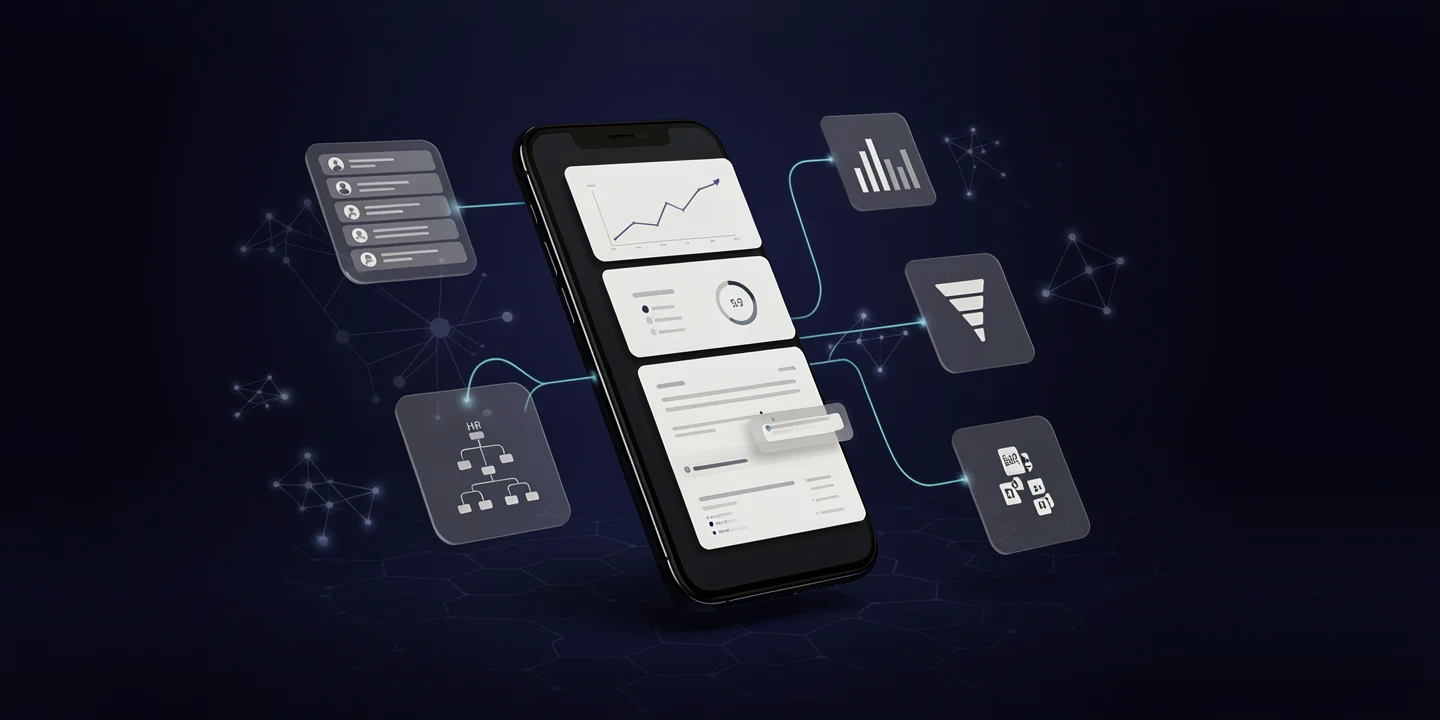
Mobile applications have become an important extension of the SaaS ecosystem. For years, businesses focused on bringing existing software features to smartphones so employees and customers could access essential services from anywhere.
However, expectations are changing quickly. Users increasingly want applications that do more than display information or provide basic controls. They expect software to understand context, automate repetitive activities, and help them make decisions. Consequently, SaaS providers are moving toward intelligent workflows that connect data, automation, and user actions within a single experience.
Features Are Giving Way to Useful Experiences
Traditional mobile SaaS development often centered on individual features. A user might open an application to review a dashboard, approve a request, update a record, or send a message.
Although these capabilities remain valuable, they can create unnecessary friction when users must complete every step manually. Therefore, modern SaaS applications are increasingly designed around complete workflows rather than isolated functions.
Instead of simply showing a sales opportunity, for example, an intelligent application could identify an important change, recommend an action, update relevant records, and notify the appropriate team member. As a result, the application becomes an active business assistant rather than another interface for accessing software.
AI Is Making Mobile Workflows More Intelligent
Artificial intelligence is one of the major forces behind this transformation. AI can analyze user behavior, business information, customer interactions, and operational data to provide more contextual experiences.
Moreover, machine learning can help applications recognize patterns and make useful recommendations. A project management application might identify potential delays, while a customer platform could highlight accounts that require attention.
Consequently, SaaS companies can create experiences that respond to business situations rather than simply waiting for users to initiate every action.
Automation Can Reduce Everyday Friction
Intelligent workflows also depend heavily on automation. Employees often spend considerable time moving information between applications, approving routine requests, searching for data, and completing repetitive administrative activities.
By connecting these processes, SaaS applications can reduce unnecessary manual work. For instance, a mobile application could automatically route an approval request, update a connected system, and alert a manager when an important action is completed.
Furthermore, automation can improve consistency because routine processes follow predefined rules while still allowing employees to intervene when human judgment is required.
Connected Data Is Creating Better Context
An intelligent workflow is only as useful as the information supporting it. Therefore, SaaS providers are increasingly connecting mobile applications with cloud platforms, customer databases, analytics systems, communication tools, and enterprise applications.
This connected approach allows software to understand more of the user’s context. Instead of treating every action as an isolated event, applications can combine multiple data points to generate more relevant recommendations.
Meanwhile, Technology insights and IT industry news continue to emphasize the importance of connected ecosystems as organizations pursue broader digital transformation.
Personalization Is Becoming More Practical
Another important development is contextual personalization. Traditional personalization often relied on basic information such as user preferences or account details. Intelligent applications can go further by considering activity, timing, behavior, location permissions, workflow status, and business context.
For example, a sales professional could receive relevant customer information before a meeting, while an employee could see pending approvals based on current responsibilities.
Similarly, HR trends and insights show why employee focused software experiences matter. When applications reduce unnecessary steps and provide useful information at the right moment, employee productivity and engagement can improve.
The Impact on Sales and Marketing Teams
Mobile SaaS applications are particularly valuable for customer facing teams because business activities often happen away from a traditional desktop environment.
Sales professionals can access customer information, review opportunities, receive recommendations, and update records while traveling or meeting clients. Therefore, intelligent workflows can help sales teams spend less time managing systems and more time building relationships.
Marketing teams can also benefit from connected customer information and automated workflows. Marketing trends analysis increasingly focuses on personalization, customer journeys, data integration, and timely engagement. Consequently, mobile SaaS platforms can become an important part of broader customer experience strategies.
Financial Teams Are Looking for Greater Efficiency
The shift toward intelligent workflows is also relevant to finance departments. Financial teams manage approvals, reporting, expense processes, forecasts, and other activities where accuracy and efficiency are important.
Finance industry updates increasingly highlight the need to control operational costs while improving access to reliable information. Intelligent SaaS applications can support this objective by automating routine processes and surfacing important financial information when decisions need to be made.
However, automation should not remove appropriate oversight. Sensitive financial activities still require strong controls, permissions, security, and human review.
Security Must Remain Central
As SaaS applications become more intelligent and connected, security becomes even more important. Mobile applications can access sensitive business information, customer records, employee data, and financial systems.
Therefore, developers need to consider identity management, secure APIs, encryption, access controls, application monitoring, and privacy from the beginning of development.
Moreover, intelligent workflows should operate within clearly defined permissions. A system may recommend an action, but organizations should determine which actions can happen automatically and which require human approval.
What the Future Holds for SaaS Mobile Apps
The next generation of SaaS applications is likely to focus less on individual features and more on complete business outcomes. AI, automation, connected data, and contextual personalization will increasingly work together to create software that understands what users need and helps them accomplish it.
As a result, mobile applications could become increasingly proactive. Rather than requiring users to navigate through multiple screens, applications may surface relevant information, recommend next steps, and automate routine activities at the right moment.
This evolution could reshape how businesses think about mobile software and digital productivity.
Valuable Insights for the Evolving IT Ecosystem
The move toward intelligent workflows represents a broader change in SaaS product design. The strongest applications will not simply offer more features. Instead, they will make everyday work easier by connecting information, understanding context, and reducing unnecessary effort.
For SaaS companies, the opportunity is therefore to design around customer problems and measurable outcomes. AI and automation should support that objective rather than become features added simply because they are popular.
Ultimately, intelligent mobile experiences can help businesses create faster, more personalized, and more efficient digital workflows while keeping people at the center of important decisions.
Explore more expert Technology insights and IT industry news on iTechInfoPro.com.
Stay informed with practical perspectives on digital transformation, SaaS innovation, and the evolving technology ecosystem.