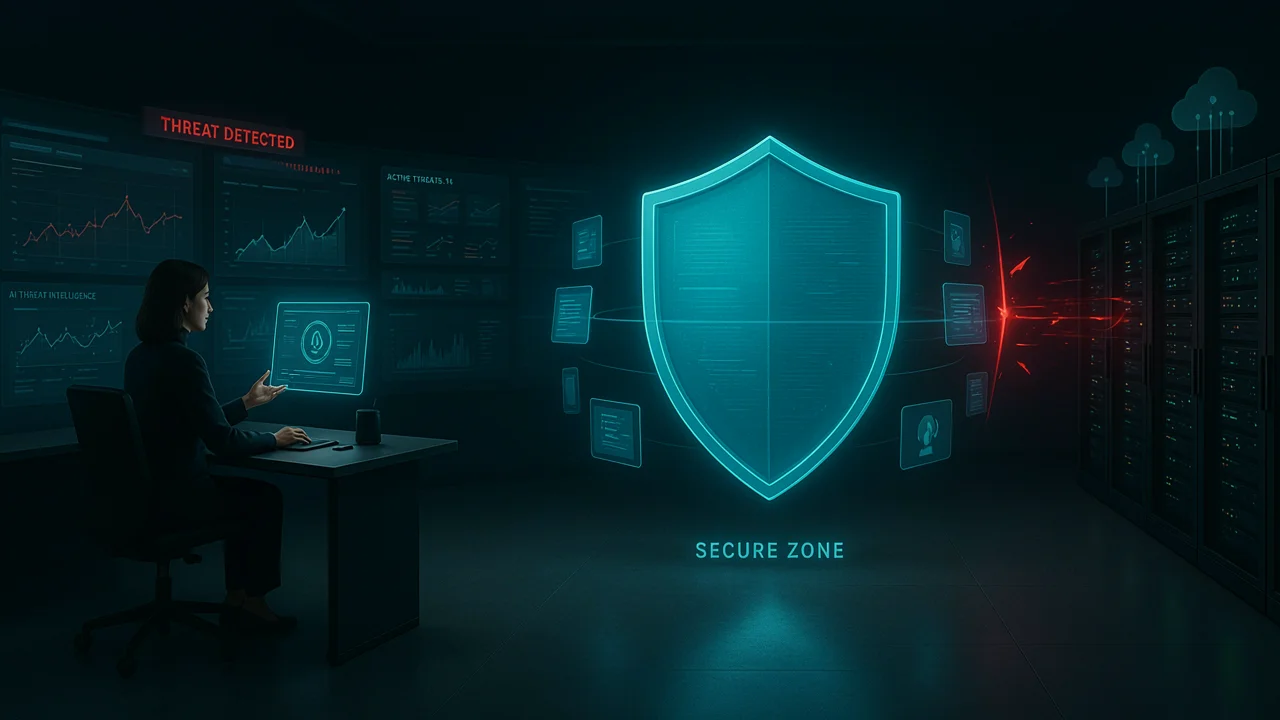
IT Governance provides a structured approach for managing these challenges. By establishing clear policies, responsibilities, controls, and decision-making processes, SaaS companies can scale their technology environments without allowing security and operational risks to grow unchecked.
In 2026, effective IT Governance is becoming an important part of building secure, resilient, and scalable SaaS organizations.
What Is IT Governance?
IT Governance is the framework an organization uses to ensure that its technology supports business objectives while managing risk and maintaining accountability.
For a SaaS company, this can include policies for cybersecurity, data management, access control, cloud infrastructure, software development, vendor management, compliance, and technology investments.
Rather than treating technology decisions as isolated technical choices, governance connects them to broader business priorities.
Why IT Governance Matters for SaaS Companies
SaaS companies depend heavily on technology to deliver their products and services. A problem with infrastructure, security, data, or software operations can directly affect customers.
As a SaaS business grows, informal processes that worked for a small team may no longer be sufficient.
New employees need appropriate access. Customer data needs consistent protection. Cloud environments require monitoring. Vendors need to be evaluated. Development teams need secure processes.
IT Governance creates a consistent framework for managing these responsibilities.
Establishing Clear Technology Accountability
One of the biggest benefits of IT Governance is clearly defining who is responsible for technology decisions.
Without clear ownership, important security or operational tasks can fall between teams.
A governance framework can establish responsibilities for areas such as data protection, application security, infrastructure management, incident response, compliance, and vendor risk.
Clear accountability makes it easier to identify problems and ensure that appropriate teams take action.
Strengthening SaaS Cybersecurity
Security becomes increasingly important as SaaS companies scale.
More customers, employees, applications, APIs, integrations, and cloud services can create a larger attack surface.
IT Governance helps organizations establish security policies and controls that apply consistently across the business.
This may include identity and access management, security monitoring, vulnerability management, secure software development, incident response, and regular security assessments.
Governance does not replace cybersecurity technology. Instead, it provides the structure needed to use those technologies effectively.
Managing Access to Sensitive Data
SaaS companies often handle sensitive customer and business information.
As teams grow, employees may require access to different applications and datasets. Without proper controls, excessive permissions can create unnecessary security risks.
IT Governance can establish principles for access management, including role-based permissions, approval processes, periodic access reviews, and timely removal of access when employees change roles or leave the organization.
This helps ensure that employees have the access they need without automatically receiving access to everything.
Supporting Regulatory Compliance
SaaS companies may need to meet different security, privacy, and industry requirements depending on their customers and markets.
Compliance can become difficult when processes are inconsistent or undocumented.
IT Governance helps organizations establish repeatable processes for policies, controls, documentation, monitoring, and audits.
A well-designed governance framework can also make it easier to demonstrate that security and compliance requirements are being addressed.
Improving Cloud Governance
Cloud platforms provide SaaS companies with flexibility and scalability, but uncontrolled cloud adoption can create operational and security challenges.
Different teams may deploy resources independently, use inconsistent configurations, or create unnecessary infrastructure.
Cloud governance can establish standards for resource management, security configurations, access permissions, cost controls, monitoring, and deployment practices.
This allows SaaS companies to benefit from cloud scalability while maintaining greater control over their technology environment.
IT Governance and Software Development
Governance also plays an important role in the software development lifecycle.
SaaS companies release updates frequently, making secure development practices essential.
Governance frameworks can establish requirements for code reviews, testing, vulnerability scanning, dependency management, deployment approvals, and security assessments.
These controls can help development teams maintain speed while reducing the likelihood that security issues reach production environments.
Managing Third-Party Vendors
SaaS companies often depend on external providers for cloud infrastructure, payment processing, analytics, customer support, communication, and other services.
Each vendor can introduce additional operational and security considerations.
IT Governance helps companies establish a consistent process for evaluating vendors before and during their relationship with the organization.
Vendor assessments can consider security practices, data handling, access requirements, business continuity, compliance, and incident response capabilities.
Reducing Technology Risks
Rapid growth can lead SaaS companies to accumulate technology debt and operational risks.
Legacy applications, outdated dependencies, poorly documented processes, and inconsistent configurations can become increasingly difficult to manage.
Governance provides a mechanism for identifying and prioritizing these risks.
Organizations can evaluate technology risks based on potential business impact and determine which issues require immediate attention.
Supporting Better Technology Decisions
Technology decisions can have long-term consequences for SaaS companies.
Choosing a new platform, infrastructure architecture, security solution, or software system can affect costs, scalability, customer experience, and security.
IT Governance provides a decision-making framework that encourages teams to evaluate technology investments against business objectives.
This can reduce unnecessary technology spending and help organizations focus resources on initiatives that provide meaningful business value.
Creating a Culture of Security and Accountability
Governance is not only about policies and documentation.
Employees need to understand why security and technology controls exist and how their actions affect the organization.
Regular training, clear communication, leadership involvement, and ongoing awareness can help build a culture where employees take technology responsibilities seriously.
When governance becomes part of everyday operations rather than a compliance exercise, it can have a stronger impact.
Automating IT Governance
Technology is also changing how governance is managed.
Automation can help SaaS organizations monitor controls, track access permissions, identify configuration issues, collect compliance evidence, and generate reports.
AI can further support governance by analyzing large volumes of operational and security information and identifying unusual patterns or potential risks.
However, automated governance still requires human oversight. Organizations need qualified teams to interpret findings and make important risk decisions.
How SaaS Companies Can Build Effective IT Governance
A scalable governance program should begin with the organization’s most important business and technology risks.
Companies can identify critical systems and data, establish ownership, document policies, define security controls, and regularly evaluate whether those controls remain effective.
Governance should also evolve as the company grows.
A framework that works for a small SaaS startup may need to become more structured as the organization adds customers, employees, products, cloud environments, and international operations.
The Future of IT Governance in SaaS
As SaaS companies adopt more AI, cloud services, APIs, automation, and connected applications, technology environments will continue to become more complex.
This makes IT Governance increasingly important.
Future governance strategies will likely focus on continuous monitoring, automated controls, AI-assisted risk detection, cloud governance, data protection, software supply-chain security, and stronger accountability.
The goal will be to make governance an integrated part of technology operations rather than a separate administrative process.
Conclusion
IT Governance gives SaaS companies the structure they need to scale technology securely and responsibly.
By establishing clear accountability, strengthening cybersecurity, managing access, supporting compliance, controlling cloud environments, evaluating vendors, and improving technology decision-making, governance can help organizations reduce risk while continuing to grow.
For SaaS companies in 2026, secure growth requires more than innovative products and scalable infrastructure. It requires a governance framework that ensures technology remains aligned with business objectives while protecting customers, employees, and critical data.
Explore more expert Technology insights and digital innovation stories on iTechInfoPro.com to stay ahead in the evolving IT landscape.