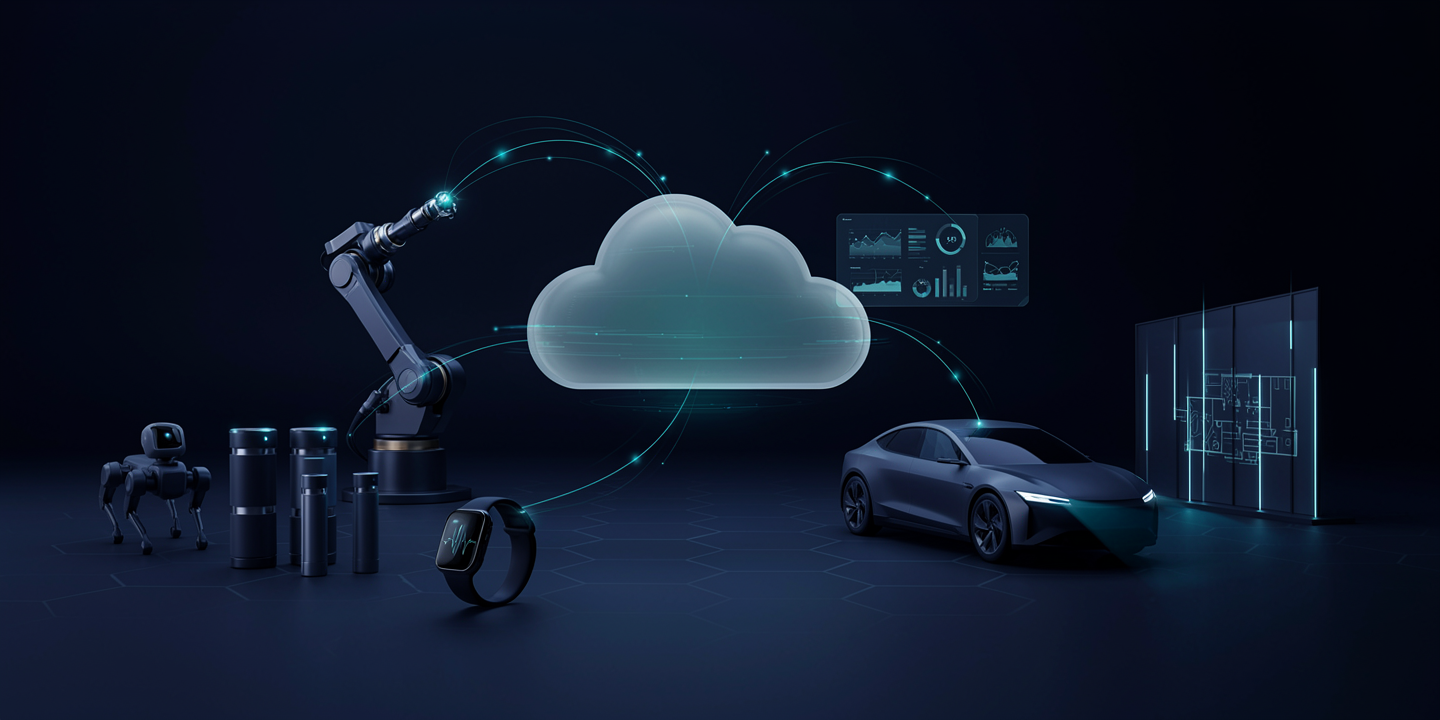
IoT SaaS is changing how businesses build, manage, and scale connected device ecosystems in 2026. Instead of relying entirely on expensive on-premises infrastructure and custom software, organizations can use cloud-based platforms to connect devices, collect data, monitor operations, and deliver intelligent services more efficiently.
As connected devices become increasingly common across manufacturing, healthcare, logistics, retail, agriculture, smart buildings, and transportation, the combination of IoT and SaaS is creating new opportunities for businesses to turn device data into useful insights and automated actions.
What Is IoT SaaS?
IoT SaaS combines Internet of Things technology with Software as a Service delivery models. Connected devices collect information through sensors and transmit that information to cloud platforms, where it can be stored, analyzed, monitored, and used by applications.
Instead of developing every component internally, businesses can use an IoT SaaS platform to manage device connectivity, data processing, dashboards, alerts, analytics, and other functions through cloud-based services.
This approach can reduce the complexity involved in deploying large connected-device networks while giving organizations greater flexibility as their IoT operations expand.
How Cloud Platforms Are Transforming IoT
Traditional IoT deployments often require significant investment in hardware, servers, networking infrastructure, and specialized software. Cloud platforms are changing this model by moving many of these capabilities into scalable online environments.
With IoT SaaS, organizations can connect devices to centralized platforms and access information from virtually anywhere. Cloud infrastructure can also provide the computing resources needed to process large volumes of sensor data without requiring companies to maintain all of the underlying infrastructure themselves.
This makes it easier for businesses to experiment with connected technologies and scale successful deployments.
Real-Time Data and Monitoring
One of the biggest advantages of IoT SaaS is the ability to transform raw device data into real-time operational visibility.
Sensors can continuously collect information about equipment performance, temperature, location, energy consumption, inventory, or environmental conditions. Cloud platforms can process this information and present it through dashboards that help teams understand what is happening across their operations.
Real-time alerts can also notify employees when unusual conditions occur. This can help businesses respond to potential problems before they develop into larger operational disruptions.
Predictive Maintenance Gets Smarter
IoT SaaS can also support predictive maintenance strategies. Connected equipment can continuously generate information about operating conditions, allowing cloud-based analytics systems to identify patterns associated with potential failures.
Instead of waiting for equipment to break down or following fixed maintenance schedules, organizations can use data-driven insights to determine when servicing may be required.
For industries that depend on machinery, vehicles, or industrial equipment, this can help reduce unexpected downtime and improve asset utilization.
IoT SaaS and Artificial Intelligence
The growing integration of artificial intelligence is making IoT SaaS platforms more capable. AI can analyze large volumes of sensor data, detect anomalies, identify patterns, and support automated decision-making.
For example, an industrial organization could use AI to identify unusual machine behavior, while a logistics company could analyze connected vehicle data to improve routing and fleet management.
As AI becomes more integrated into cloud platforms, IoT systems are moving beyond simple monitoring toward more intelligent and automated operations.
Improving Business Scalability
Scalability is another major advantage of IoT SaaS. A company may begin with a small number of connected devices and eventually expand to thousands or millions of endpoints.
Cloud-based platforms can make this expansion easier by providing centralized infrastructure for device management, data processing, user access, and application integration.
Businesses can also add new capabilities as their requirements evolve instead of rebuilding their entire technology environment from scratch.
Security Challenges in IoT SaaS
The growing adoption of connected devices also creates significant security responsibilities. Every connected endpoint can potentially become an entry point into an organization’s technology environment.
IoT SaaS providers therefore need strong security controls around device authentication, access management, encryption, software updates, data protection, and network monitoring.
Organizations should also evaluate the security practices of their IoT SaaS providers before connecting critical devices or sensitive operational systems to external platforms.
IoT SaaS Across Industries
IoT SaaS is being applied across a wide range of industries. Manufacturers can monitor production equipment and optimize factory operations. Healthcare organizations can use connected technologies to monitor equipment and support remote services.
Retailers can connect smart shelves, inventory systems, and store infrastructure. Logistics companies can track vehicles and shipments, while agriculture businesses can use sensors to monitor soil conditions, irrigation, and environmental factors.
Smart buildings can also use connected sensors to optimize energy consumption, security, lighting, and heating or cooling systems.
The Future of IoT SaaS
The future of IoT SaaS will likely involve deeper integration between connected devices, cloud computing, artificial intelligence, edge computing, and advanced analytics.
As businesses collect more data from physical environments, the ability to process and act on that information quickly will become increasingly important. Edge computing can complement cloud platforms by processing certain information closer to devices, while cloud systems can provide centralized analytics and management.
This combination can create more responsive, intelligent, and scalable connected ecosystems.
Conclusion
IoT SaaS is transforming connected-device management by bringing cloud scalability, centralized monitoring, analytics, automation, and AI capabilities into IoT environments.
For businesses, the value goes beyond simply connecting devices. The real opportunity is turning continuous streams of physical-world data into actionable insights and automated decisions.
As cloud platforms and connected technologies continue to evolve in 2026, IoT SaaS is positioned to become an important foundation for smarter operations across industries.
ExploreiTechInfoPro.com for expert coverage of emerging technologies, digital transformation trends, and innovations shaping the future of the IT ecosystem.