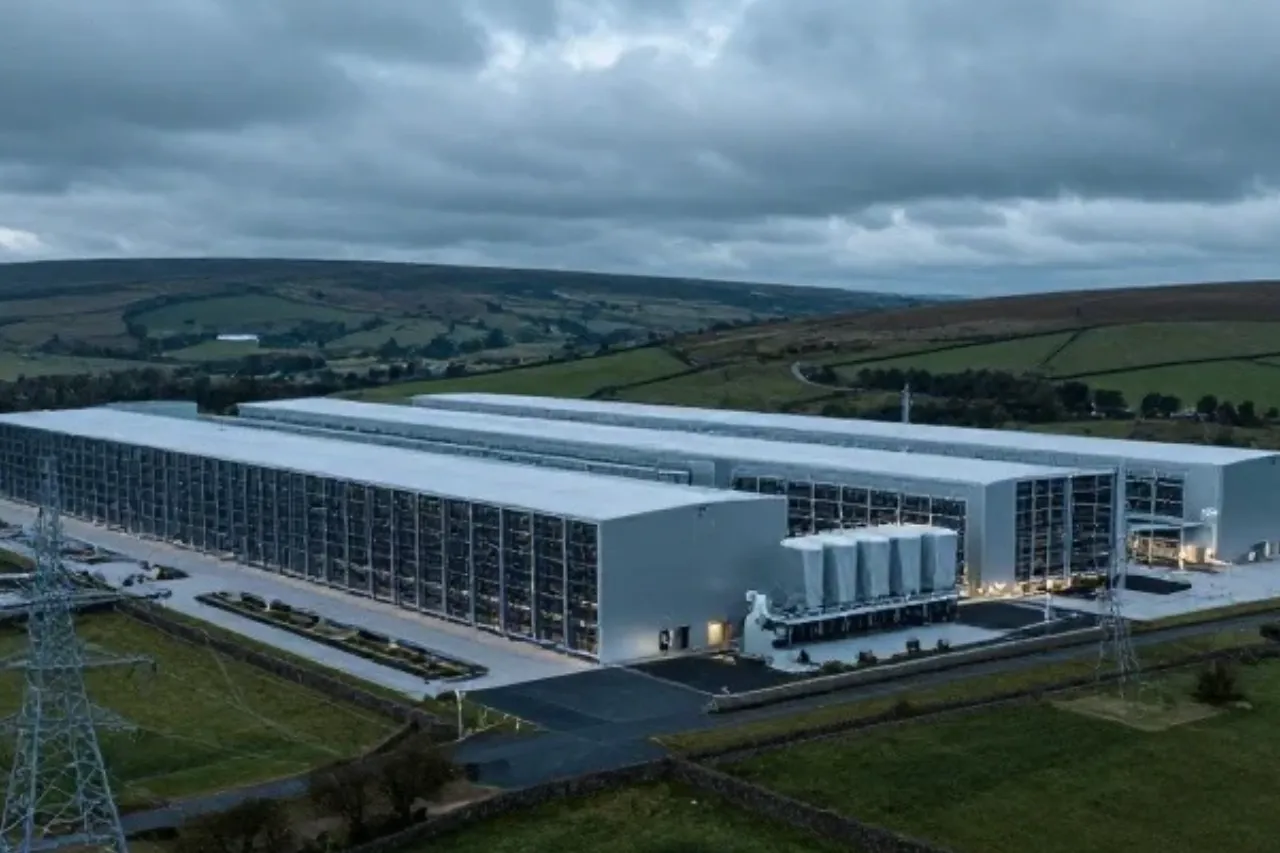
The United Kingdom is taking another significant step towards strengthening its artificial intelligence infrastructure as energy company Drax partners with global investment firm Brookfield and AI infrastructure platform Radiant to develop a major data centre in North Yorkshire. Announced on 3 November 2026, the project could attract more than £20 billion, equivalent to approximately $27 billion, in total investment.
The proposed development will be located at Drax Power Station and is expected to deliver more than one gigawatt of data centre capacity when fully developed. The partnership reflects growing demand for advanced computing infrastructure as businesses increasingly adopt artificial intelligence, cloud services, and data intensive technologies.
The development also highlights an important shift in the IT industry news landscape, where access to reliable electricity, advanced computing systems, and digital infrastructure is becoming essential for national technology competitiveness.
How the Drax and Brookfield Partnership Will Work
The partnership brings together three organisations with complementary capabilities. Drax will contribute land, power infrastructure, and access to its existing electricity grid connection. Brookfield will provide investment capital and operational expertise through its AI infrastructure joint venture with Qatar’s Qai, while Radiant will lead the development of the AI computing infrastructure.
The project will use the existing facilities at Drax Power Station, which has approximately 4GW of grid access and 2.6GW of dispatchable generation capacity. Its established infrastructure makes the location particularly attractive for a large scale data centre development.
According to the companies, the total potential investment could exceed £20 billion, including an initial £2.5 billion allocation for the first phase. However, the full investment will depend on the project’s development, commercial requirements, and future expansion decisions.
Three Phases Planned for the UK Data Centre Development
The proposed AI data centre will be developed in multiple stages to accommodate growing computing requirements.
The first phase targets up to 100MW of capacity, with commercial operations expected to begin in the first quarter of 2028. Initially, this development will draw electricity directly from the grid, supported by Drax’s existing infrastructure.
The second phase aims to increase capacity to approximately 500MW between 2028 and 2031. A further expansion is planned after 2031, with the long term ambition of exceeding one gigawatt.
However, the first phase remains subject to planning permissions, regulatory and network approvals, securing a suitable tenant, and final investment decisions. The partners are preparing the planning process and expect community consultation to begin in November 2026.
Artificial intelligence applications require substantial computing resources to process information, train models, and deliver responses. As generative AI, machine learning, and advanced analytics become increasingly integrated into business operations, demand for specialised data centre infrastructure continues to grow.
Modern AI data centres require powerful processors, advanced cooling systems, reliable electricity supplies, and high capacity network connections. Consequently, technology companies and infrastructure investors are increasingly exploring locations that can support these requirements at scale.
The Drax development demonstrates how existing industrial sites can potentially support a new generation of digital infrastructure. Instead of building entirely new facilities without established power connections, developers can explore locations with existing land, grid access, and supporting infrastructure.
These developments provide important technology insights into how energy infrastructure and computing capabilities are becoming closely connected.
Boosting the UK’s Sovereign AI and Technology Ambitions
The project could strengthen the UK’s ability to host advanced AI computing infrastructure within its own borders. Sovereign AI has become an important consideration for governments and businesses seeking greater control over data, computing resources, and critical digital services.
Access to domestic computing capacity could benefit technology startups, research institutions, public sector organisations, and enterprises developing advanced AI applications.
Moreover, the investment could support regional economic development in Yorkshire and the wider North of England. The companies expect the project to protect existing employment opportunities while creating additional direct and indirect jobs through construction, infrastructure management, engineering, and technology operations.
These developments also create opportunities across HR trends and insights, particularly in demand for specialised skills in AI infrastructure, cybersecurity, data engineering, and cloud computing.
Financial Investment and Energy Infrastructure Challenges
The proposed investment represents a significant development for both the UK technology sector and infrastructure finance. Brookfield’s involvement brings substantial investment capabilities, while Drax could gain a new long term commercial opportunity through the use of its existing industrial site and energy infrastructure.
Nevertheless, building and operating a data centre of this scale presents considerable challenges. Electricity demand, cooling requirements, network capacity, environmental standards, and construction costs will all influence the project’s long term viability.
The development will also require careful coordination between energy providers, technology companies, regulators, and infrastructure operators. Finance industry updates increasingly reflect how investors are evaluating digital infrastructure as a major growth opportunity, particularly as AI adoption accelerates.
What the Development Means for the Future of AI Infrastructure
The Drax and Brookfield partnership highlights how the future of artificial intelligence depends on more than software innovation. Reliable electricity, advanced computing hardware, secure networks, and scalable data centre facilities will determine how quickly organisations can deploy AI technologies.
As the project progresses, its ability to secure approvals, attract customers, and deliver the planned capacity will be important indicators of the UK’s broader AI infrastructure ambitions.
For technology businesses, the development signals growing opportunities across cloud computing, enterprise AI, cybersecurity, infrastructure engineering, and digital services. It also reinforces the importance of connecting technology investments with long term energy and business strategies.
Explore more expert technology insights, IT industry news, and digital transformation developments on iTechInfoPro.com.
Source : reuters.com