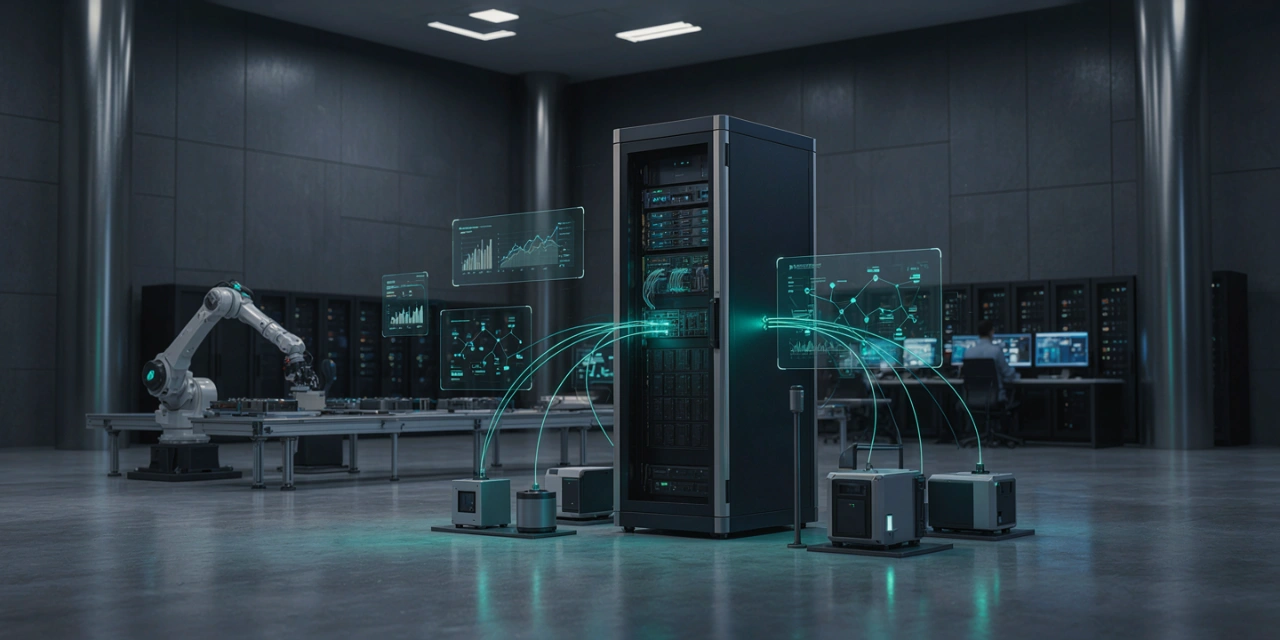
Edge computing is becoming increasingly important as businesses look for faster, more responsive and efficient ways to process artificial intelligence workloads. Instead of sending every task to centralized cloud infrastructure, organizations can process data closer to where it is generated. This approach can support real time decision making across manufacturing, retail, transportation, healthcare and other industries.
Against this backdrop, Advantech announced on September 17, 2026 that it is expanding its WEDA powered Edge AI ecosystem with Intel, Qualcomm and AMD. The initiative is designed to simplify Edge AI development, validation, deployment and lifecycle management across different computing platforms.
Creating a More Connected Edge AI Ecosystem
Advantech is positioning WEDA, or WISE Edge Developer Architecture, as a foundation for building and managing Edge AI applications. The company says its WEDA Ready Edge Computing platform and Advantech Container Catalog can help developers reduce the complexity associated with different hardware environments and AI software frameworks.
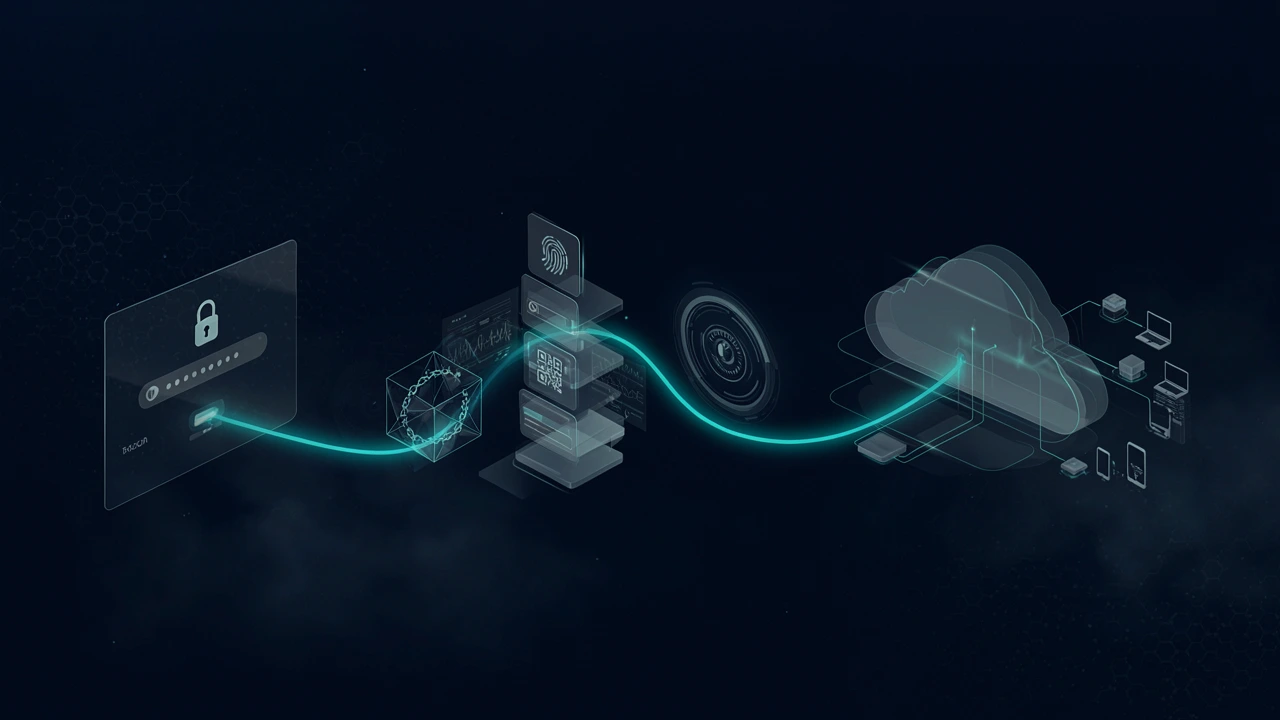
Moreover, the ecosystem connects edge execution with cloud orchestration through containerized deployment, AI model management, digital twin synchronization and device lifecycle management. As a result, businesses can move more efficiently from developing an AI application to deploying it across multiple locations.
One of the most important aspects of the announcement is its cross chip approach. WEDA Ready Edge Computing supports platforms from Intel, Qualcomm, AMD, NVIDIA and NXP. This allows developers to work across heterogeneous edge environments while maintaining a more consistent development and management experience.
Intel brings its broad computing portfolio and Open Edge approach into the ecosystem, while Qualcomm contributes AI platform capabilities for industrial and enterprise applications. Meanwhile, AMD is supporting WEDA Ready platforms based on AMD Ryzen AI Embedded processors and pre validated container resources.
This flexibility is significant because organizations increasingly operate different generations and types of computing hardware. Therefore, a software environment that can support multiple architectures can reduce integration challenges and make large scale deployment more practical.
Making Edge AI Development More Accessible
Developing an AI solution for the edge can involve considerably more than training a model. Developers need to consider hardware compatibility, operating systems, drivers, inference frameworks, security, deployment processes and ongoing updates.
Advantech’s container based approach aims to simplify several of these challenges. Its Container Catalog provides resources for different platforms and applications. For example, the company highlights Intel related resources using OpenVINO and Qualcomm resources involving technologies such as Qualcomm Hexagon.
Consequently, developers can spend more time improving applications rather than repeatedly adapting software for different hardware environments. This could become increasingly valuable as businesses deploy AI across distributed locations.
The expansion also reflects a wider digital transformation taking place across the IT ecosystem. Businesses are moving beyond experimental AI projects and exploring how intelligent systems can operate continuously in physical environments.
Manufacturing facilities can use edge systems for machine vision and industrial monitoring, while retailers can apply AI to customer experiences and automated operations. Healthcare environments can also benefit from localized data processing where responsiveness and operational reliability matter.
Advantech’s broader Edge AI portfolio already covers applications involving robotics, smart manufacturing, environmental monitoring, workplace safety and medical AI.
These developments also connect with wider Technology insights and IT industry news, where AI infrastructure is becoming an increasingly important part of enterprise technology planning.
Why Local AI Processing Matters
Cloud computing remains essential for large scale AI training, centralized analytics and enterprise data management. However, sending every piece of information to the cloud may not always be practical.
Edge AI can process information closer to the source. This can reduce the need to continuously transfer large volumes of data and can support faster responses for applications that require immediate decisions.
Additionally, localized processing can become valuable for organizations managing sensitive operational information. The exact architecture will depend on factors such as application requirements, connectivity, security and infrastructure costs.
Implications Across Business Functions
The growth of Edge AI can influence more than IT departments. HR trends and insights may increasingly involve workforce requirements for AI engineering, embedded systems and intelligent automation. Similarly, Finance industry updates may focus on infrastructure investment and the potential operational value of distributed computing.
Sales strategies and research can also evolve as technology providers develop new enterprise solutions around intelligent edge infrastructure. Meanwhile, Marketing trends analysis may increasingly consider how real time AI capabilities can support connected customer experiences in retail and other environments.
As a result, Edge AI is becoming part of a broader technology conversation rather than remaining solely a hardware or software engineering topic.
Moving From Prototype to Production
A major challenge for enterprise AI has always been moving successful experiments into reliable production environments. Advantech’s WEDA ecosystem is designed around this transition, with tools intended to support development, deployment, scaling and ongoing AI model management.
Moreover, Advantech describes WEDA as a way to create a standardized lifecycle for Edge AI. Developers can use ready to develop containers, scale applications through cloud APIs and manage models as deployments evolve.
This approach highlights an important shift in the IT industry. AI success is increasingly dependent not only on model performance but also on the infrastructure used to deploy, maintain and update intelligent applications.
Future Outlook for Edge AI
The collaboration between Advantech, Intel, Qualcomm and AMD illustrates how the future of computing is becoming more distributed and interconnected. Rather than relying exclusively on centralized infrastructure, enterprises can combine cloud resources with intelligent systems operating closer to physical environments.
For businesses, the practical opportunity lies in building flexible architectures that can accommodate changing AI workloads, hardware platforms and operational requirements. Therefore, interoperability, security, lifecycle management and efficient deployment will remain important considerations.
As Edge AI continues to mature, the combination of specialized processors, containerized software and cloud connected management could help organizations turn AI innovation into scalable real world applications.
Explore more expert technology insights and emerging IT developments with iTechInfoPro.com.
Stay informed about the technologies shaping digital transformation and the future of the global IT ecosystem.
Source : advantech.com