Artificial intelligence is entering a new phase as businesses move beyond basic automation toward systems that can analyze information, make decisions, and perform tasks independently. In 2026, AI agents are transforming enterprise IT operations by helping organizations manage complex workflows, resolve technical issues, and improve operational efficiency. These intelligent systems are becoming an important part of digital transformation strategies across industries.
Unlike traditional automation tools that follow predefined instructions, AI agents can interpret goals, evaluate available information, and determine appropriate actions within defined boundaries. Consequently, IT teams can reduce repetitive work and focus more attention on innovation, system reliability, and business growth. These developments are creating new opportunities for organizations seeking practical technology insights in an increasingly competitive digital economy.
How AI Agents Improve IT Service Management
IT service management involves handling support requests, monitoring infrastructure, troubleshooting problems, and maintaining business applications. Traditionally, these activities require significant manual effort. However, AI agents can streamline many of these processes by analyzing support tickets, identifying recurring problems, recommending solutions, and automating approved responses.
For example, an AI agent can investigate a reported connectivity issue by reviewing system logs, checking network performance, and identifying possible causes. If the problem falls within its authorized responsibilities, it may initiate a predefined remediation process or escalate the incident to a specialist. As a result, organizations can improve response times while reducing pressure on IT support teams.
Moreover, AI agents can support proactive IT service management by identifying patterns that indicate potential service disruptions. Instead of waiting for employees to report problems, IT departments can address emerging issues before they significantly affect business operations.
Autonomous IT Operations and Predictive Maintenance
Modern enterprises depend on interconnected cloud platforms, databases, applications, and network infrastructure. Managing these environments becomes increasingly challenging as digital services expand. AI agents can help organizations monitor infrastructure continuously, interpret performance signals, and coordinate responses when systems behave unexpectedly.
Predictive maintenance is another important application. By analyzing historical incidents, resource utilization, error logs, and performance trends, AI agents can identify conditions associated with potential failures. Therefore, technical teams can investigate warning signs earlier and schedule maintenance before minor issues develop into costly disruptions.
Additionally, AI agents can assist with cloud resource optimization by identifying underused computing capacity, detecting unusual workloads, and recommending infrastructure adjustments. Nevertheless, organizations should retain human approval for high impact changes involving production systems, sensitive information, or critical business services.
Strengthening Cybersecurity Through Intelligent Automation
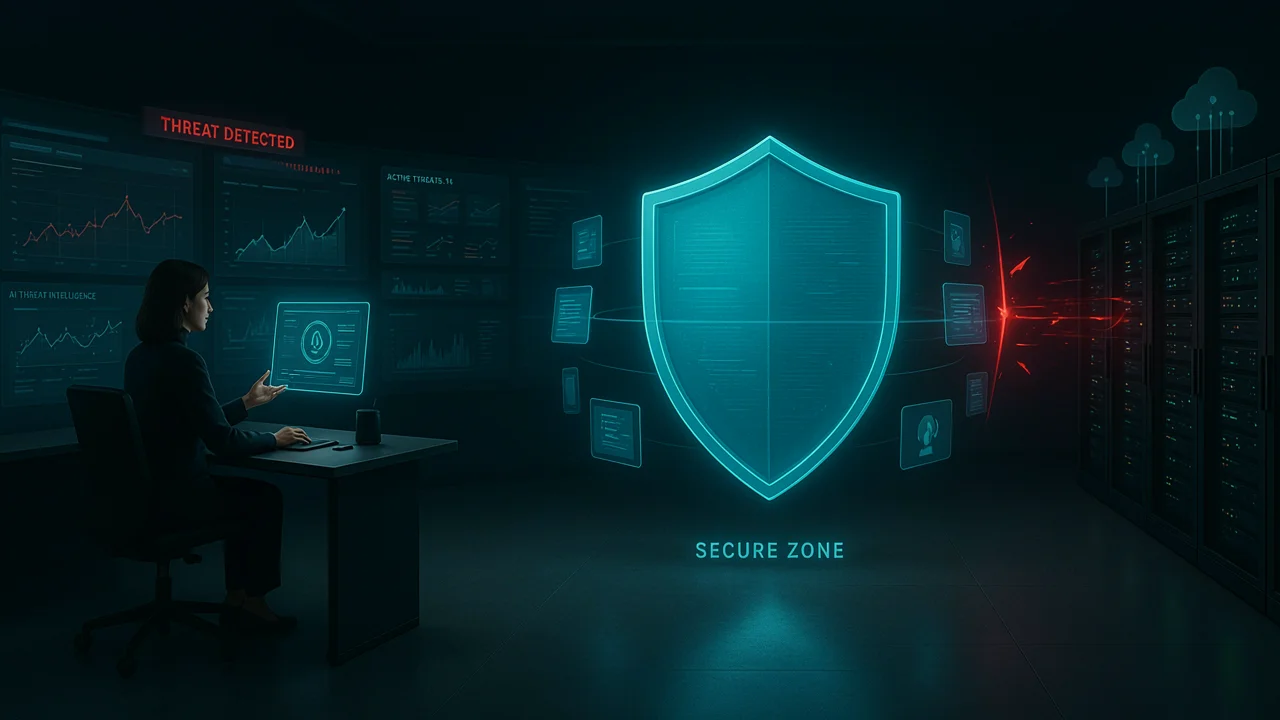
Cybersecurity teams face a growing volume of alerts, sophisticated attacks, and increasingly complex technology environments. AI agents can help security professionals investigate suspicious activity, correlate information from multiple monitoring tools, and prioritize incidents according to their potential impact.
For instance, an agent may connect unusual login behavior with unexpected network traffic and suspicious account activity. It can then assemble relevant evidence and recommend containment measures. In carefully controlled environments, approved actions can also be automated to reduce the time between detection and response.
However, intelligent automation does not eliminate cybersecurity risks. Poorly configured agents may expose sensitive data, follow manipulated instructions, or take inappropriate actions when information is incomplete. Organizations therefore need strong access controls, detailed audit logs, continuous monitoring, and clear escalation procedures.
These developments are particularly relevant to IT industry news as enterprises reconsider how security operations can balance faster responses with reliable human oversight.
Connecting AI Agents With Business Functions
The impact of AI agents extends beyond IT departments. When connected to approved enterprise systems, they can support collaboration across finance, human resources, sales, and marketing.
Finance teams can use AI agents to assist with transaction reviews, reconciliation workflows, and reporting preparation. These capabilities complement finance industry updates by helping organizations explore more efficient approaches to financial operations while maintaining appropriate approval controls.
Similarly, HR teams can automate routine employee inquiries, assist with onboarding workflows, and organize internal documentation. These applications connect with HR trends and insights, particularly as organizations seek to improve employee experiences without increasing administrative workloads.
Sales teams can use AI agents to summarize customer interactions, update customer relationship management records, and identify follow up opportunities. Meanwhile, marketing departments can analyze campaign performance, organize customer feedback, and prepare reports that support marketing trends analysis. Sales strategies and research can also benefit from faster access to customer information and market signals.
Nevertheless, organizations must establish clear data access policies and review procedures to prevent inaccurate recommendations or unauthorized decisions.
Challenges Enterprises Must Address
Despite their potential, AI agents introduce technical, operational, and governance challenges. Integrating them with existing business applications can require significant planning, especially when organizations rely on legacy infrastructure or fragmented data systems.
Reliability is another concern. AI agents may misunderstand instructions, produce inaccurate results, or make decisions based on incomplete information. Therefore, businesses should begin with clearly defined use cases, limited permissions, and measurable performance targets.
Data privacy and accountability also require attention. Enterprises need to understand which information agents can access, what actions they can perform, and how their decisions are recorded. Human oversight remains essential for sensitive operations, financial approvals, security incidents, and other activities where mistakes could have serious consequences.
Additionally, organizations should train employees to supervise AI driven workflows effectively. Successful implementation depends not only on technology but also on employee confidence, process redesign, and a culture that encourages responsible experimentation.
Technology Insights and the Future of Enterprise AI
Looking ahead, AI agents are likely to become more deeply integrated with enterprise software, cloud infrastructure, cybersecurity platforms, and business intelligence systems. Improvements in reasoning, tool integration, and coordinated agent workflows could enable organizations to automate increasingly complex processes.
However, progress will depend on more than model capabilities. Reliable data, secure infrastructure, transparent governance, and meaningful performance measurement will determine whether these systems deliver sustainable business value.
For organizations planning their next stage of digital transformation, the most effective approach is to begin with repetitive, well defined workflows where outcomes can be measured. Businesses should evaluate improvements in resolution time, service availability, operating costs, and employee productivity before expanding automation into more sensitive areas.
Ultimately, AI agents are transforming enterprise IT operations by helping teams move from reactive problem solving toward more proactive, coordinated, and intelligent service delivery. Organizations that combine automation with human expertise will be better positioned to adapt to changing technology demands throughout 2026 and beyond.
Explore more expert technology insights, emerging innovations, and digital transformation updates at iTechInfoPro.com.
Stay informed about the IT developments shaping modern businesses and the future of enterprise technology.