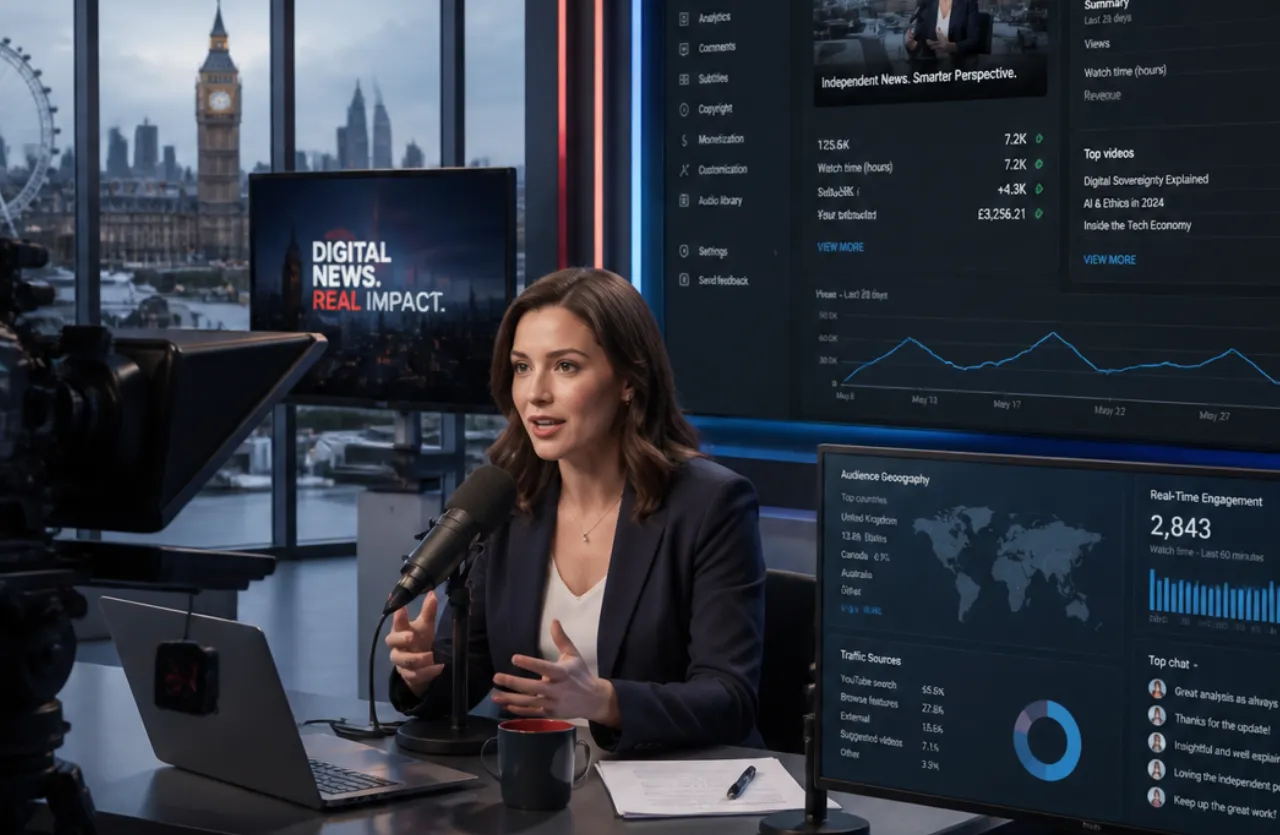
Reform UK is expanding its digital communications operation with plans for a dedicated YouTube based television channel, a larger editorial team, and a broader online publishing presence. Announced in October 2026, the initiative follows substantial donations to the party and represents a significant investment in controlling how its messages reach the public.
According to Reuters, Reform UK has begun recruiting media professionals to produce regular video content, interviews, documentaries, and digital publications. The party aims to build on its existing YouTube presence and establish a more consistent publishing operation.
The development offers an example of how digital transformation is changing political communications. Organizations increasingly use online platforms to publish content directly, reach audiences across multiple channels, and reduce their dependence on traditional distribution networks.
How Online Video Is Changing Political Communications
Video platforms have become important channels for news, commentary, interviews, and public communication. YouTube allows organizations to publish content on their own schedules while using recommendations, subscriptions, and audience analytics to understand viewer behavior.
Reform UK’s planned media platform follows this model. Rather than relying exclusively on interviews and coverage from established broadcasters, the party intends to produce more of its own content and distribute it directly to viewers.
This approach reflects wider technology trends across the media industry. Digital publishers, businesses, and public figures increasingly combine long form video with shorter clips, podcasts, newsletters, and social media posts to reach different audiences.
However, direct publishing also places greater responsibility on organizations to maintain editorial standards, verify claims, and distinguish factual reporting from commentary. The ability to control distribution does not automatically establish the credibility of the content being distributed.
The expansion is supported by significant financial resources. Reuters reported that Reform UK received £72 million in donations from cryptocurrency entrepreneurs Christopher Harborne and Ben Delo in September 2026. The party plans to use its funding across media production, campaign operations, staffing, and policy development. <Cite refs={[“turn638647news17”]}/>
A larger media operation requires more than a video channel. It can involve professional recording facilities, editing software, content management systems, digital distribution tools, analytics platforms, and staff responsible for production and publishing.
These requirements demonstrate how the modern media ecosystem combines technology infrastructure with editorial work. Efficient production workflows allow teams to adapt content for websites, video platforms, email newsletters, and social media without rebuilding every asset from scratch.
Moreover, a dedicated publishing team can establish a more predictable content schedule. Consistent output may help an organization maintain audience attention, although actual reach will depend on content quality, distribution, viewer interest, and competition.
Audience Analytics and Digital Engagement
Audience data plays an increasingly important role in digital media strategy. Video platforms provide metrics such as viewing time, audience retention, subscriber growth, and engagement. Publishers can use these signals to understand which subjects attract attention and where viewers stop watching.
For Reform UK, an expanded online operation could create more opportunities to evaluate audience responses and refine its content strategy. This is similar to how technology companies and commercial publishers use analytics to improve their digital products.
Nevertheless, engagement metrics require careful interpretation. A high number of views does not necessarily indicate audience trust, factual accuracy, or agreement with a message. Consequently, organizations should evaluate their digital performance using broader measures of audience quality and content effectiveness rather than relying on popularity alone.
These technology insights are relevant beyond politics. Businesses can apply similar principles to educational videos, product demonstrations, customer support content, and brand communications.
Digital publishing gives organizations greater control over their schedules, formats, and distribution. However, traditional broadcasters continue to provide editorial oversight, professional reporting, and established audience relationships.
Reform UK’s proposed channel is intended to reduce its reliance on established broadcasters and provide a direct route to viewers. Reuters has reported that the initiative follows negative coverage and controversies involving the party. The party’s media expansion therefore has both a technological dimension and a clear communications objective.
The wider industry is experiencing a similar shift as audiences consume news through streaming services, social platforms, podcasts, and independent digital publications. This change creates new opportunities for publishers, but it also raises questions about transparency, accountability, and the separation between journalism and organizational messaging.
For readers, understanding who produces content and how it is funded remains important when evaluating information encountered online.
What This Means for the Evolving IT Ecosystem
The expansion of digital media operations illustrates the growing importance of integrated technology systems. Content production, publishing, audience measurement, and distribution increasingly operate as connected parts of a single digital workflow.
For technology professionals, this development highlights the value of scalable cloud infrastructure, reliable video delivery, secure publishing systems, and analytics tools. It also demonstrates how media organizations can use digital platforms to reach audiences without building a conventional broadcast network.
Meanwhile, HR trends and insights are relevant as media operations recruit journalists, editors, producers, and social media specialists with increasingly diverse technical skills. Finance industry updates also intersect with the story because large scale private funding can influence the pace and scope of technology investment.
Similarly, sales strategies and research, along with marketing trends analysis, offer useful ways to understand audience development, content distribution, and the economics of digital publishing.
Reform UK’s media expansion reflects a broader transformation in how organizations communicate with the public. Online video, digital publishing, and audience analytics have made it easier to establish dedicated media operations, but long term success will depend on more than financial resources or technical infrastructure.
Organizations investing in digital communications need clear editorial processes, effective data management, consistent publishing standards, and a strong understanding of their audiences. They must also consider platform policies, regulatory obligations, and the reputational consequences of publishing inaccurate or misleading information.
As the digital media landscape evolves, the most useful technology insights will come from examining how infrastructure, content quality, and audience trust work together. Reform UK’s planned platform provides a current example of the opportunities and challenges involved in building a direct digital publishing operation.
Explore more expert technology insights and IT industry news at iTechInfoPro.com.
Stay informed about innovation, media technology, and the evolving digital ecosystem.