Java continues to play an important role in enterprise software, cloud infrastructure, financial applications, and large scale digital platforms. On September 15, 2026, Oracle announced the general availability of Java 27, bringing nine significant JDK Enhancement Proposals across security, performance, runtime behavior, language development, and libraries.
One of the most notable developments is post quantum hybrid key exchange for TLS 1.3. Alongside this security enhancement, the release introduces improvements to memory efficiency, garbage collection, cryptographic performance, and developer productivity.
These changes demonstrate how the Java ecosystem is adapting to evolving requirements across the modern IT industry.
Post Quantum Cryptography Strengthens Java Security
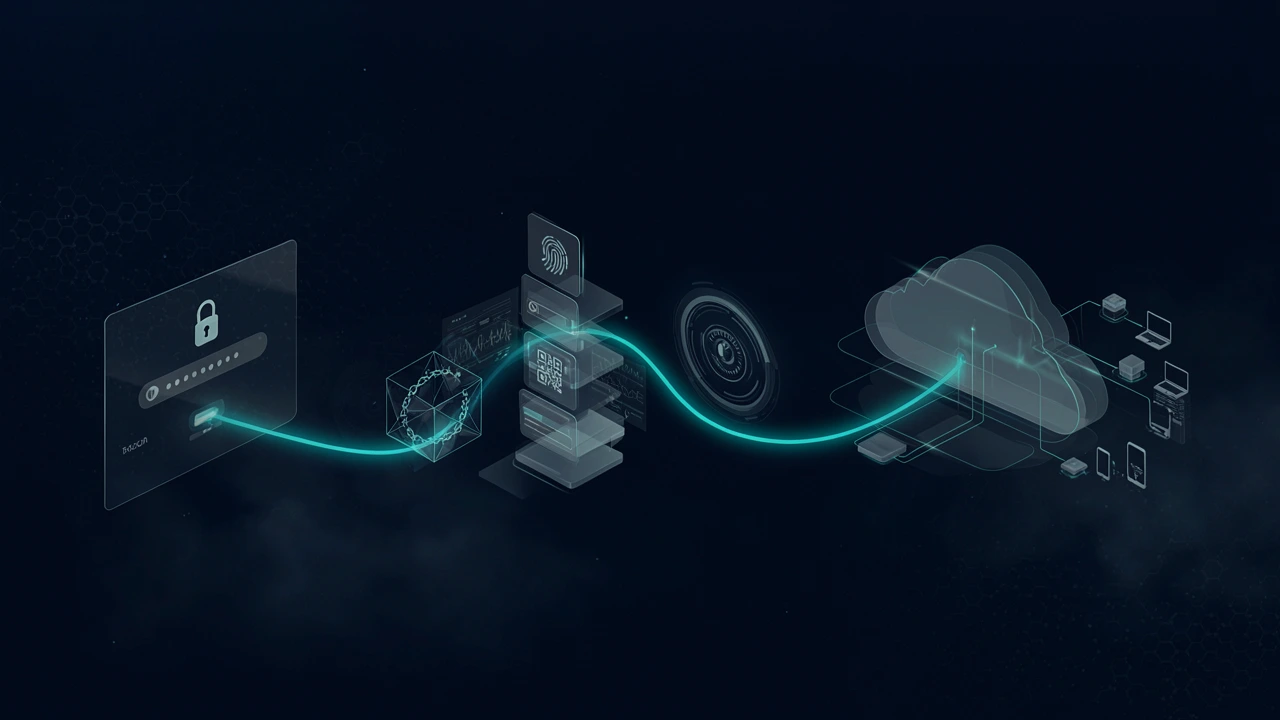
Java 27 introduces JEP 527, which adds post quantum hybrid key exchange for TLS 1.3. The approach combines a traditional cryptographic algorithm with a quantum resistant algorithm to strengthen secure network communications against potential future quantum computing attacks.
The implementation supports hybrid groups including X25519MLKEM768, SecP256r1MLKEM768, and SecP384r1MLKEM1024. Oracle states that applications using the javax.net.ssl APIs can benefit from the improved algorithms without requiring changes to existing application code.
This development is important for organizations handling sensitive information across financial services, healthcare, ecommerce, government systems, and enterprise applications. Secure communication is increasingly becoming a fundamental requirement of digital transformation.
Why Quantum Resistant Security Matters
Quantum computing represents a potential long term challenge for widely used public key cryptography. Although large scale quantum computers capable of breaking today’s commonly deployed cryptographic systems are not currently available, security researchers and technology companies are preparing for the possibility.
One concern is the harvest now and decrypt later scenario, where encrypted information collected today could potentially be decrypted in the future if sufficiently powerful quantum systems become available. Oracle has therefore been working toward making post quantum cryptography available across the Java ecosystem.
For organizations building long lived applications, this makes cryptographic agility increasingly relevant. Technology leaders can consider how existing applications, network connections, certificates, and security policies may eventually accommodate newer cryptographic standards.
Security is not the only area receiving attention. Java 27 also introduces performance improvements designed to make applications more efficient.
JEP 523 makes the G1 garbage collector the default garbage collector across environments. Previously, G1 was primarily the default for server environments. Java 27 also introduces compact object headers by default, reducing object headers from 96 bits to 64 bits on supported 64 bit architectures.
These changes can influence memory usage, application density, and data locality. For enterprise applications running at scale, even incremental runtime improvements can become meaningful when multiplied across large infrastructure environments.
Improvements for Modern Java Development
Java 27 includes nine JEP level enhancements, with four preview features and one incubator feature. These updates cover areas ranging from language capabilities and runtime behavior to security and library functionality.
The release also includes the Vector API as an incubating feature. The API is designed to express vector computations that can compile at runtime to optimized instructions on supported processors, potentially improving performance compared with equivalent scalar operations.
Structured concurrency is another preview capability in Java 27. It treats groups of related tasks running in different threads as a single unit, helping developers manage error handling, cancellation, and observability in concurrent applications.
Together, these developments provide developers with additional tools for building sophisticated applications while the Java platform continues to evolve.
Helidon 27 Supports Cloud Native Applications
The Java 27 release is accompanied by updates across the wider Java ecosystem, including Helidon 27. Helidon is designed for lightweight Java microservices and cloud native applications.
The update supports capabilities around declarative APIs, data access, messaging, telemetry, MicroProfile, and enterprise integration. Oracle has also highlighted AI related capabilities within Helidon for organizations developing modern intelligent applications.
This is particularly relevant as businesses increasingly move workloads toward distributed architectures. Cloud native applications often require efficient services that can communicate with databases, APIs, analytics systems, and other enterprise platforms.
JavaFX 27 Enhances Interactive Applications
JavaFX 27 provides another important ecosystem update. The release includes improvements to rich client applications, graphics, controls, accessibility, and text handling. JavaFX 27 also uses Apple’s Metal rendering pipeline as the default rendering pipeline on macOS, replacing the OpenGL based ES2 pipeline.
These improvements can benefit organizations developing interactive desktop applications, analytics interfaces, visualization tools, and enterprise software.
As digital experiences become increasingly important, responsive interfaces and accessible applications remain important elements of technology strategy.
Java 27 and the Evolving IT Ecosystem
The significance of Java 27 extends beyond individual developers. Java continues to support applications across industries where security, reliability, scalability, and performance are essential.
For finance teams, stronger cryptographic capabilities can support technology environments handling sensitive transactions and customer information. This makes the release relevant to Finance industry updates as organizations evaluate infrastructure security and modernization.
Similarly, HR trends and insights increasingly involve workforce technology and digital skills. Developers working with Java may need to understand cloud native architectures, cybersecurity, performance optimization, and emerging AI technologies.
Sales strategies and research can also depend on enterprise applications that process customer information and power CRM integrations. Reliable backend infrastructure therefore remains an important part of the broader digital business environment.
Digital transformation increasingly depends on interconnected applications rather than isolated software systems. APIs, cloud services, databases, customer platforms, analytics tools, and internal applications need to exchange information securely.
Java’s continued investment in security and performance therefore has relevance across the wider technology ecosystem. Organizations can use these capabilities as part of broader modernization programs while assessing compatibility with their existing applications.
Meanwhile, IT teams should evaluate new Java capabilities through testing and controlled deployment rather than assuming every new feature should immediately enter production environments.
Valuable Insights and Practical Outlook
Java 27 represents an important step in the continued evolution of the Java platform. Its post quantum hybrid key exchange capabilities address an emerging security challenge, while performance improvements and developer focused enhancements support modern application development.
The release also shows how the Java ecosystem is expanding across cloud native services, interactive applications, AI development, and enterprise security. For organizations managing large technology environments, these developments provide additional options for improving application architecture and preparing for changing security requirements.
For professionals following Technology insights and IT industry news, Java 27 is a useful example of how established technology platforms can continue adapting to new computing challenges without abandoning the enterprise ecosystem that already depends on them.
Explore more expert Technology insights and the latest IT industry news on iTechInfoPro.com.
Stay informed about software innovation, cybersecurity, cloud computing, and the technologies shaping the modern IT ecosystem.
Source : infoq.com