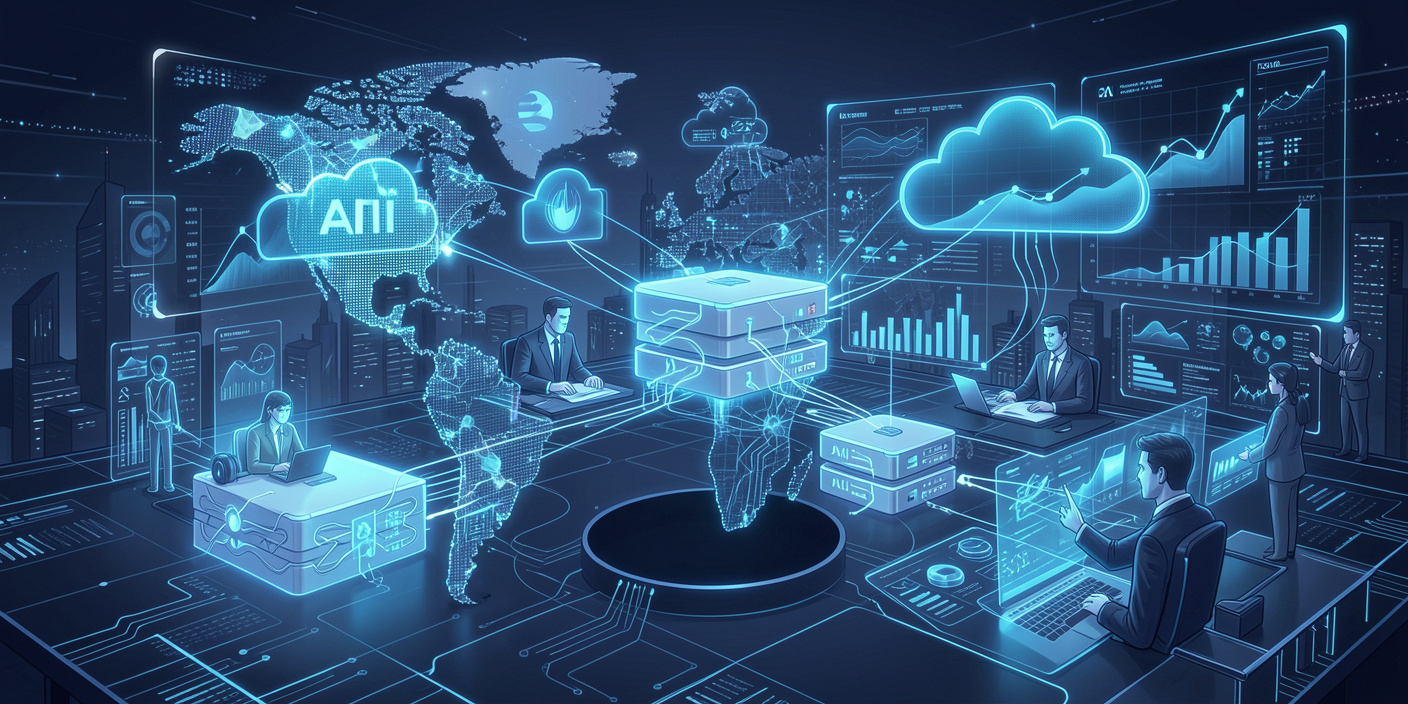
Migration management has become increasingly complex as governments, businesses, and international organizations respond to rising global mobility. Managing visas, work permits, border security, refugee support, and workforce movement requires efficient systems that can process large volumes of information accurately and securely. As a result, technology has emerged as a critical driver of modernization across migration services.
Understanding How Technology Is Reshaping Migration Management helps organizations appreciate how digital innovation is improving efficiency while enhancing transparency and decision making. Moreover, modern technologies are enabling authorities to deliver faster, safer, and more reliable services for individuals and businesses alike.
Artificial intelligence improves decision making
Artificial intelligence is transforming the way migration systems process applications and analyze complex information. AI powered platforms can review documents, identify missing information, detect inconsistencies, and assist officials in prioritizing cases more efficiently.
Additionally, predictive analytics helps agencies anticipate demand for migration services by analyzing historical trends and current application patterns. Consequently, resources can be allocated more effectively, reducing processing delays while improving service quality.
For readers interested in Technology insights, these developments demonstrate how intelligent automation is becoming an essential part of modern public services.
Cloud technology enables secure collaboration
Cloud computing has become a foundation for digital migration management. Governments and organizations increasingly rely on secure cloud platforms to store records, share information across departments, and support remote access for authorized personnel.
Meanwhile, cloud infrastructure improves scalability, allowing agencies to manage sudden increases in application volumes without disrupting services. Furthermore, centralized systems simplify data management while strengthening operational resilience during periods of high demand.
As digital transformation accelerates, cloud technology continues supporting more connected and responsive migration ecosystems.
Digital identity strengthens security
Identity verification has become one of the most important components of migration management. Digital identity solutions allow authorities to verify applicants more accurately while reducing the risk of identity fraud.
Moreover, biometric technologies such as facial recognition and fingerprint authentication enhance security throughout the verification process. However, these technologies must also be supported by strong privacy safeguards and transparent governance to maintain public trust.
Consequently, organizations continue investing in secure identity management systems that balance innovation with responsible data protection.
Data analytics supports better policy planning
Migration generates significant amounts of information that can help governments understand long term population trends and workforce needs. Advanced analytics platforms transform this information into valuable insights for policymakers and administrators.
Similarly, data driven forecasting helps authorities prepare for changing migration patterns, labor market requirements, and regional resource planning. These capabilities improve operational efficiency while supporting evidence based decision making.
This growing emphasis on analytics reflects broader developments featured in IT industry news, where intelligent data management remains central to digital transformation.
Technology benefits employers and global talent
Businesses increasingly depend on international talent to fill specialized roles. Modern migration management platforms simplify recruitment by digitizing visa processes, document verification, and workforce compliance.
Additionally, employers gain greater visibility into application progress, reducing uncertainty during international hiring. These improvements also complement evolving HR trends and insights, where digital workforce management continues gaining importance.
As organizations expand globally, streamlined migration processes help attract skilled professionals while improving employee experiences from the very beginning of the hiring journey.
Innovation encourages responsible migration systems
Technology not only improves operational efficiency but also promotes fairness and accessibility. Digital platforms provide applicants with real time status updates, multilingual support, and self service portals that reduce confusion throughout the migration process.
Furthermore, automation minimizes repetitive administrative tasks, allowing officials to focus on more complex cases requiring human judgment. In contrast, outdated paper based systems often create unnecessary delays and communication challenges.
These innovations demonstrate how technology can improve both administrative efficiency and user satisfaction across public services.
Digital ecosystems continue to evolve
Migration management increasingly connects with broader digital ecosystems involving education, employment, healthcare, financial services, and border management. Therefore, interoperability between different systems becomes essential for delivering seamless experiences.
Organizations also benefit from developments highlighted through Finance industry updates, Sales strategies and research, and Marketing trends analysis, as technologies developed for commercial sectors often influence public sector innovation. As a result, migration platforms continue adopting more advanced automation, analytics, and customer focused digital services.
Looking ahead for migration technology
The future of How Technology Is Reshaping Migration Management will be defined by greater integration between artificial intelligence, cloud computing, secure digital identity, and advanced analytics. These technologies will continue improving operational efficiency while helping governments and organizations respond to evolving migration challenges with greater confidence.
Moreover, staying informed through Technology insights, IT industry news, HR trends and insights, Finance industry updates, Sales strategies and research, and Marketing trends analysis enables technology professionals and business leaders to understand how digital innovation is influencing both public services and the broader IT ecosystem.
Explore iTechInfoPro.com for expert coverage of emerging technologies, digital transformation, and the innovations shaping tomorrow’s connected world.