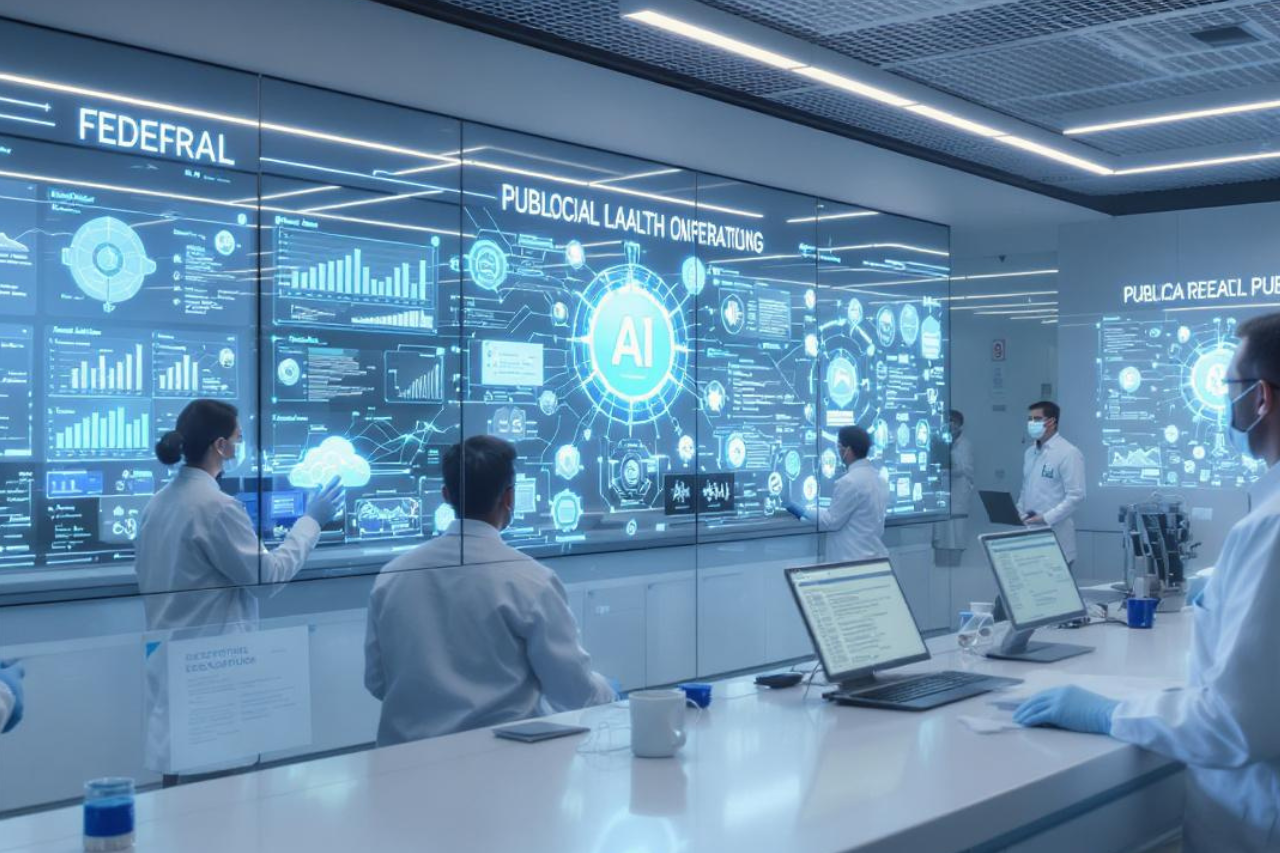
Artificial intelligence continues to reshape how organizations collect information, analyze data, and improve decision making. Now, Health Agencies to Evaluate OpenAI and Anthropic AI marks another important step in the growing adoption of advanced AI across the public sector. As healthcare systems generate increasing volumes of scientific research and operational data, intelligent technologies are becoming valuable tools for improving efficiency while supporting human expertise.
Moreover, this evaluation reflects a broader movement toward responsible innovation across government institutions. Rather than replacing professionals, AI is being examined for its ability to enhance research, simplify complex workflows, and improve access to reliable information. These developments also provide valuable Technology insights for organizations following the future of artificial intelligence.
Why Health Agencies Are Testing Advanced AI Models
Public health organizations handle massive collections of medical studies, regulatory guidance, surveillance reports, and healthcare documentation. Consequently, reviewing this information manually requires significant time and resources.
Therefore, agencies are exploring whether OpenAI and Anthropic models can assist with document analysis, knowledge discovery, and information summarization while maintaining high standards for accuracy and security. Meanwhile, experts continue assessing how these systems perform across practical healthcare scenarios without reducing the role of human oversight.
This careful approach demonstrates that innovation in healthcare depends on trust, transparency, and responsible implementation.
v
Digital transformation has become a priority for healthcare institutions worldwide. Electronic records, cloud computing, predictive analytics, and artificial intelligence are creating smarter systems that support better operational outcomes.
Additionally, evaluating modern AI models allows agencies to identify technologies capable of improving productivity without compromising patient privacy or regulatory compliance. As a result, healthcare professionals may spend more time focusing on strategic decisions while AI assists with repetitive knowledge based tasks.
Similarly, these initiatives encourage technology providers to develop solutions that meet the demanding requirements of public sector organizations.
OpenAI and Anthropic Bring Different Strengths
Both OpenAI and Anthropic have developed sophisticated language models capable of understanding natural language, generating detailed responses, and assisting with research intensive work. However, each company approaches AI development with unique priorities related to safety, reliability, and responsible model behavior.
Moreover, health agencies are expected to compare response quality, contextual understanding, factual consistency, and security capabilities before determining how these technologies may fit into future public health operations.
In contrast to consumer applications, government evaluations require extensive validation because every recommendation must support informed decision making while protecting sensitive information.
Innovation Beyond the Healthcare Sector
The significance of this evaluation extends well beyond hospitals and research institutions. Consequently, organizations across finance, education, manufacturing, and enterprise technology are watching these developments closely.
Businesses seeking IT industry news recognize that government adoption often influences broader enterprise investment strategies. Likewise, companies exploring digital transformation can learn valuable lessons about governance, risk management, and responsible AI deployment.
Furthermore, organizations tracking HR trends and insights are using intelligent systems to improve recruitment, workforce planning, employee learning, and talent development.
At the same time, executives following Finance industry updates are applying AI to automate reporting, strengthen compliance, improve forecasting, and detect financial anomalies more efficiently.
Meanwhile, marketing professionals continue exploring Marketing trends analysis through predictive customer behavior, campaign optimization, and personalized engagement strategies that improve business performance.
Similarly, sales leaders are adopting AI powered recommendations, customer intelligence platforms, and advanced analytics that support stronger Sales strategies and research across competitive markets.
Responsible AI Remains Essential
Although artificial intelligence offers tremendous opportunities, successful implementation depends on responsible governance. Therefore, agencies evaluating OpenAI and Anthropic will likely focus on transparency, security, privacy protection, and ongoing human supervision.
Moreover, AI generated responses should always complement professional expertise rather than replace experienced decision makers. This balanced approach helps organizations reduce operational risks while maximizing the value of intelligent technologies.
As AI capabilities continue advancing, regulatory expectations and ethical standards will become even more important across every industry adopting these powerful systems.
The Growing Influence of AI on the IT Ecosystem
The evaluation of advanced AI by public health agencies reflects the rapid evolution of the global IT ecosystem. Consequently, software developers, cloud providers, cybersecurity specialists, and enterprise technology vendors are expected to continue investing in safer and more capable AI platforms.
Furthermore, collaboration between governments, research institutions, and private technology companies will accelerate innovation while encouraging higher standards for security, transparency, and accountability. As a result, digital transformation initiatives across multiple industries will benefit from more reliable and trustworthy AI solutions.
This ongoing progress demonstrates that artificial intelligence is no longer an emerging technology but an increasingly practical business capability supporting innovation and operational excellence.
Future Outlook for AI Driven Innovation
The decision by health agencies to evaluate OpenAI and Anthropic AI highlights a future where intelligent technologies become trusted partners in research, administration, and public service. Organizations that prioritize responsible adoption, continuous learning, and strong governance will be better positioned to benefit from AI while maintaining public confidence.
As innovation continues, businesses should monitor these evaluations because they offer practical lessons for enterprise AI adoption, digital transformation, and long term technology strategy. Staying informed today will help organizations make smarter technology investments tomorrow.
Explore iTechInfoPro.com for expert technology insights, emerging innovation trends, and in depth analysis of the evolving digital landscape.
Stay connected with iTechInfoPro.com to discover trusted perspectives that help you navigate the future of technology with confidence.