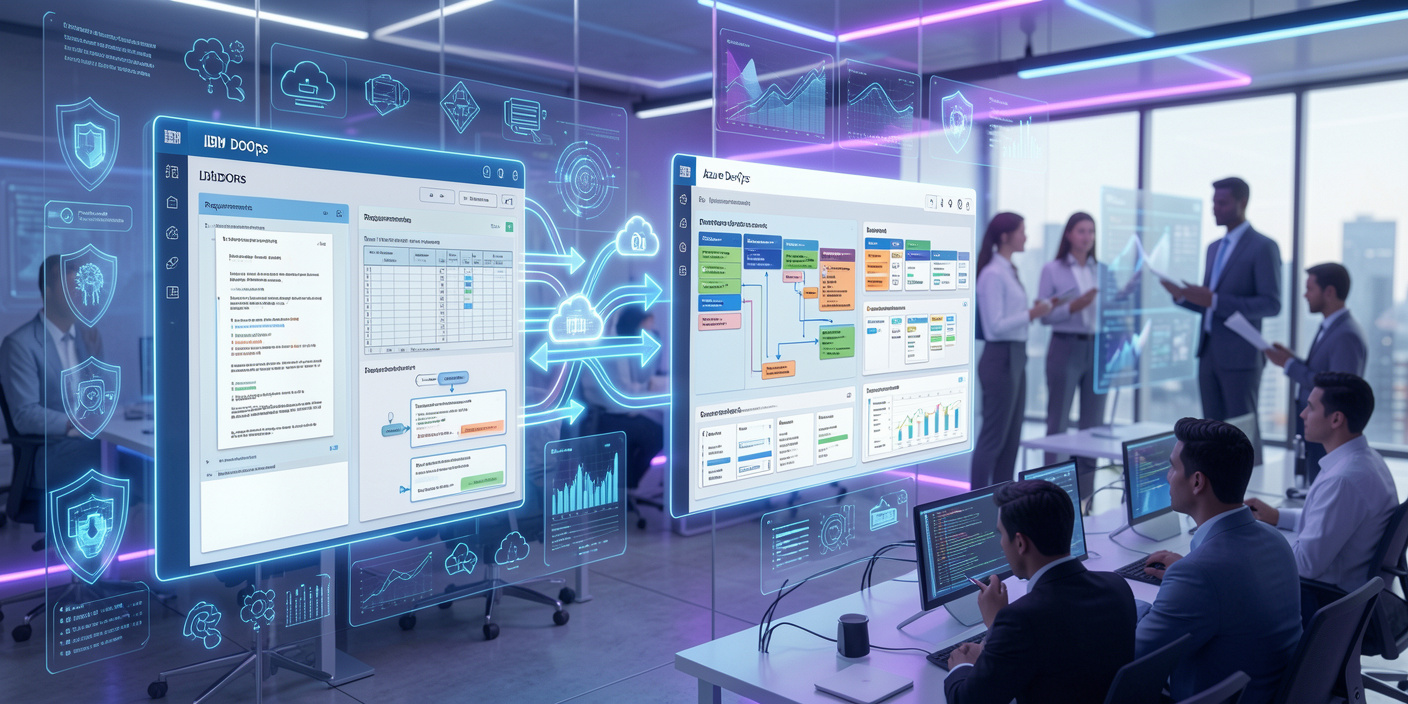
Modern software development depends on seamless collaboration between business teams, system engineers, developers, and quality assurance professionals. As organizations embrace digital transformation, disconnected tools often create delays, duplicated work, and inconsistent project information. Therefore, businesses are looking for smarter ways to connect their engineering environments and improve productivity.
One of the most effective approaches is to Connect IBM DOORS with Azure DevOps in Real Time. This integration allows requirements, development tasks, and project updates to remain synchronized across teams. As a result, organizations gain greater visibility while reducing manual effort throughout the software development lifecycle.
Understanding the Role of Both Platforms
IBM DOORS is widely recognized for managing complex requirements in industries where precision and compliance are essential. It enables organizations to document, organize, and maintain detailed requirements throughout a project. Meanwhile, Azure DevOps provides an integrated platform for planning, coding, testing, and deploying applications using modern development practices.
When these two powerful solutions work together, every requirement can be connected directly with development activities. Consequently, developers, testers, project managers, and business stakeholders share accurate information without constantly switching between disconnected systems.
Why Real Time Synchronization Matters
Software projects evolve quickly. Requirements change, customer expectations shift, and development priorities are frequently updated. Without continuous synchronization, valuable information can become outdated before teams even notice.
Real time integration solves this challenge by automatically updating connected records whenever approved changes occur. Moreover, developers immediately receive the latest requirements while analysts gain visibility into implementation progress. Similarly, project managers can monitor delivery without relying on manual reporting.
This continuous exchange of information helps reduce communication gaps and improves confidence across every stage of development.
Improving Collaboration Across Teams
Successful digital transformation depends on collaboration rather than isolated departments. Analysts define business needs, developers build solutions, quality engineers validate functionality, and leadership monitors project performance. However, disconnected tools often limit transparency between these groups.
Organizations that Connect IBM DOORS with Azure DevOps in Real Time create a unified workflow where everyone works with the same information. Additionally, automated synchronization minimizes repetitive administrative work, allowing teams to focus on innovation instead of manual updates.
As a result, projects move faster while maintaining stronger alignment between business objectives and technical execution.
Better Traceability and Regulatory Compliance
Many industries require complete traceability from initial requirements through software delivery. Healthcare, automotive, aerospace, manufacturing, and financial organizations must demonstrate how every requirement has been implemented and tested.
An integrated environment makes this process much simpler. Every requirement can be associated with development tasks, testing activities, and deployment records. Therefore, audit preparation becomes more efficient while compliance risks are significantly reduced.
Moreover, organizations gain greater confidence because every approved change remains visible throughout the development lifecycle.
Businesses continue investing in cloud technologies, automation, and agile development to remain competitive. Integration between engineering platforms supports these initiatives by removing unnecessary manual processes and improving collaboration.
Furthermore, decision makers receive accurate project information in real time, allowing faster responses to changing priorities. Consequently, organizations improve operational efficiency while delivering higher quality software with fewer delays.
These improvements also contribute valuable Technology insights that help enterprises refine engineering strategies and strengthen long term digital transformation initiatives.
Business Benefits Beyond Engineering
The value of integration extends beyond software development teams. Leadership gains better visibility into project progress, making strategic planning more reliable. Meanwhile, Finance industry updates become easier to evaluate because project timelines and resource utilization are more predictable.
Similarly, Sales strategies and research benefit from improved product readiness information that supports customer commitments. Marketing trends analysis also becomes more effective because launch planning is based on accurate engineering milestones.
In addition, organizations following current IT industry news can better understand how connected engineering platforms are reshaping enterprise software development. At the same time, HR trends and insights demonstrate how collaborative digital workplaces improve employee productivity and cross functional communication.
Best Practices for Successful Integration
A successful integration strategy begins with clearly defined business objectives rather than focusing solely on technology. Organizations should establish governance policies, identify synchronization rules, and determine ownership responsibilities before connecting systems.
Moreover, regular monitoring ensures that synchronized information remains accurate as projects evolve. Therefore, continuous optimization becomes an important part of maintaining long term integration success.
Equally important, organizations should encourage collaboration between business analysts and development teams to maximize the value of connected workflows.
Looking Ahead
As software development continues to evolve, integrated engineering platforms will become increasingly important for organizations seeking agility, transparency, and scalability. Businesses that invest in connected ecosystems today will be better prepared to manage growing project complexity while delivering innovative digital solutions.
Ultimately, organizations that Connect IBM DOORS with Azure DevOps in Real Time can strengthen collaboration, improve traceability, and support continuous innovation across every stage of the software development lifecycle. This approach not only enhances operational efficiency but also creates a stronger foundation for future technology advancements.
Explore more expert Technology insights, emerging innovations, and practical digital transformation strategies on iTechInfoPro.com.
Stay informed with trusted content that helps technology professionals navigate the rapidly evolving IT ecosystem.