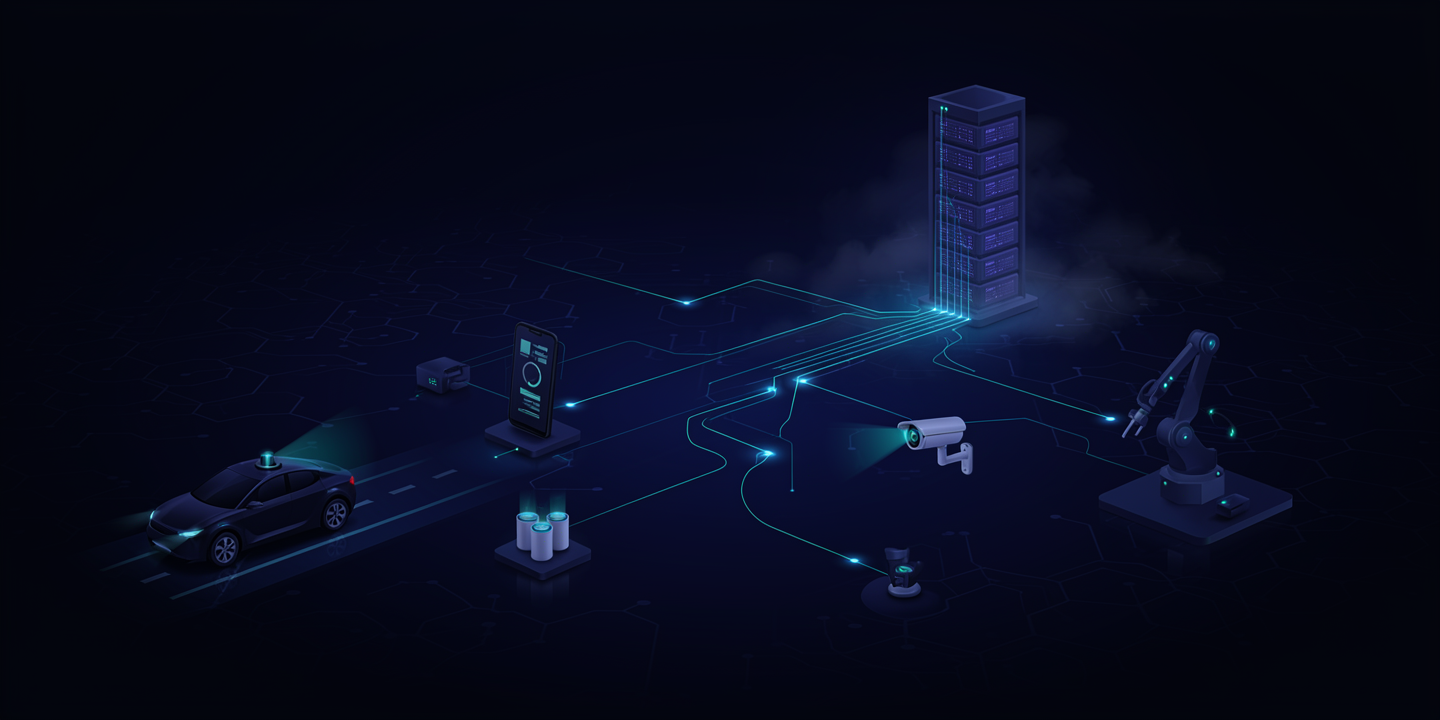
Edge computing is a technology approach that processes data closer to where it is generated instead of sending all data to a centralized cloud or data center. By moving computing and storage closer to users, devices, and applications, edge computing can reduce delays and improve the speed of data processing.
Today, billions of devices generate huge amounts of data every day. Smartphones, security cameras, industrial machines, connected vehicles, sensors, and smart home devices continuously collect information. Processing all this data in a distant cloud can sometimes create latency and increase network traffic.
Edge computing addresses this challenge by bringing computing resources closer to the source of the data.
How Does Edge Computing Work?
Traditional cloud computing generally sends data from a device to a centralized data center for processing. The processed information is then sent back to the device.
With edge computing, some of that processing happens at or near the location where the data is produced. Edge devices, gateways, local servers, or edge data centers can analyze information locally before sending selected data to a central cloud platform.
For example, consider a smart security camera. Instead of sending every video frame to a remote cloud server, an edge computing system can analyze the video locally and identify unusual activity. Only relevant information or alerts may then be sent to the cloud.
This approach can make applications faster and reduce unnecessary data transmission.
Edge Computing vs Cloud Computing
Edge computing and cloud computing are not necessarily competing technologies. In many modern systems, they work together.
Cloud computing provides centralized processing, large-scale storage, analytics, and management capabilities. Edge computing handles certain workloads closer to the devices and users.
Cloud computing is particularly useful when organizations need large amounts of computing power and centralized data management. Edge computing becomes valuable when applications require fast responses, local processing, or reduced network dependency.
A hybrid approach can combine the advantages of both technologies.
Key Benefits of Edge Computing
Faster Data Processing
One of the biggest advantages of edge computing is faster processing. Because data does not always need to travel to a distant cloud server, applications can respond more quickly.
This is particularly important for systems where even small delays can affect performance.
Reduced Latency
Latency refers to the time required for data to travel between devices and computing systems. Edge computing reduces this distance by processing data closer to its source.
Lower latency can improve applications such as autonomous vehicles, industrial automation, online gaming, and real-time monitoring.
Reduced Network Traffic
Sending huge volumes of data to centralized cloud platforms can consume significant network bandwidth. Edge computing can process and filter data locally, allowing only important information to be transferred to the cloud.
This can help organizations manage network resources more efficiently.
Improved Reliability
Edge computing can allow certain applications to continue operating even when connectivity to a centralized cloud platform is limited or temporarily unavailable.
Local processing can therefore improve the resilience of systems that require continuous operation.
Better Data Privacy
Processing sensitive information locally can reduce the amount of data that needs to travel across networks. Depending on the system design and applicable regulations, this can support stronger data privacy and security practices.
However, edge computing does not automatically make a system secure. Edge devices still need appropriate authentication, encryption, monitoring, and security controls.
Applications of Edge Computing
Internet of Things
The Internet of Things, commonly known as IoT, is one of the major use cases for edge computing. IoT devices generate large amounts of data through sensors and connected equipment.
Edge computing can analyze this information locally and provide faster responses without constantly sending every piece of data to the cloud.
Smart Cities
Smart cities use connected technologies to monitor traffic, public infrastructure, energy consumption, environmental conditions, and other services.
Edge computing can process information close to sensors and connected devices, helping city systems respond to changing conditions more quickly.
Healthcare
Healthcare organizations use connected medical devices and monitoring systems that can generate continuous streams of information.
Edge computing can support local processing for applications that require timely analysis. Sensitive information can also be processed closer to where it is generated, depending on system requirements.
Manufacturing
Manufacturing companies use sensors and connected machines to monitor production lines.
Edge computing can analyze machine data in real time and identify unusual patterns that could indicate equipment problems. This can support predictive maintenance and help reduce unexpected downtime.
Autonomous Vehicles
Connected and autonomous vehicles need to process information from cameras, sensors, GPS systems, and other sources quickly.
Sending all this information to a distant cloud before making decisions could introduce unacceptable delays in some scenarios. Edge computing enables more processing to occur within the vehicle or nearby infrastructure.
Retail
Retail businesses can use edge computing for inventory management, customer analytics, smart cameras, and personalized experiences.
Local processing can help stores analyze information quickly while reducing the amount of raw data sent to centralized systems.
What Are Edge Devices?
Edge devices are physical devices or computing systems that process data close to its source.
Examples include industrial gateways, routers, smart cameras, connected machines, local servers, sensors, and specialized computing hardware.
An edge device may collect information, process it locally, make decisions, and communicate important results to centralized cloud systems.
The exact architecture depends on the application and the amount of processing required.
Challenges of Edge Computing
Although edge computing offers many advantages, it also introduces challenges.
Security Risks
Organizations may have thousands of edge devices distributed across different locations. Each device can become a potential security target.
Companies need strong authentication, software updates, encryption, access controls, and monitoring to protect distributed infrastructure.
Management Complexity
Managing centralized cloud infrastructure can be simpler than managing large numbers of geographically distributed edge devices.
Organizations need effective tools for deployment, monitoring, maintenance, and software updates.
Limited Computing Resources
Some edge devices have limited processing power, memory, and storage compared with centralized cloud data centers.
Applications must therefore be designed carefully to determine which workloads should run locally and which should remain in the cloud.
Higher Infrastructure Costs
Deploying computing resources at multiple locations can increase hardware, maintenance, and operational costs.
Organizations should evaluate the expected performance and business benefits before implementing an edge architecture.
Edge Computing and 5G
Edge computing and 5G are often discussed together because both technologies can support applications that require fast communication and low latency.
5G networks can provide high-speed connectivity and support large numbers of connected devices. Edge computing can process information closer to those devices.
Together, these technologies can support use cases such as smart factories, connected vehicles, augmented reality, remote monitoring, and smart infrastructure.
Why Is Edge Computing Important?
The growth of connected devices is creating an enormous amount of data. At the same time, many applications require information to be processed almost immediately.
Sending every piece of data to a centralized cloud platform may not always be the most efficient approach.
Edge computing provides another layer of computing infrastructure between devices and centralized cloud environments. By processing appropriate workloads closer to users and devices, organizations can improve responsiveness, reduce network traffic, and build more efficient digital systems.
The Future of Edge Computing
Edge computing is expected to remain important as organizations adopt more connected devices, artificial intelligence, automation, and real-time applications.
AI workloads are increasingly being deployed closer to the source of data, creating opportunities for intelligent edge applications. Instead of sending every piece of information to a centralized system, devices can perform certain AI-based analysis locally.
As IoT adoption grows and businesses demand faster digital experiences, edge computing can become an increasingly important part of modern IT infrastructure.
Conclusion
Edge computing brings computing and data processing closer to the devices and users that generate and consume information. By reducing the distance between data sources and computing resources, it can help organizations achieve lower latency, faster processing, reduced network traffic, and improved application reliability.
From smart factories and connected vehicles to healthcare, retail, IoT, and smart cities, edge computing has applications across many industries.
Explore more expert Technology insights and digital innovation stories on iTechInfoPro.com to stay ahead in the evolving IT landscape.