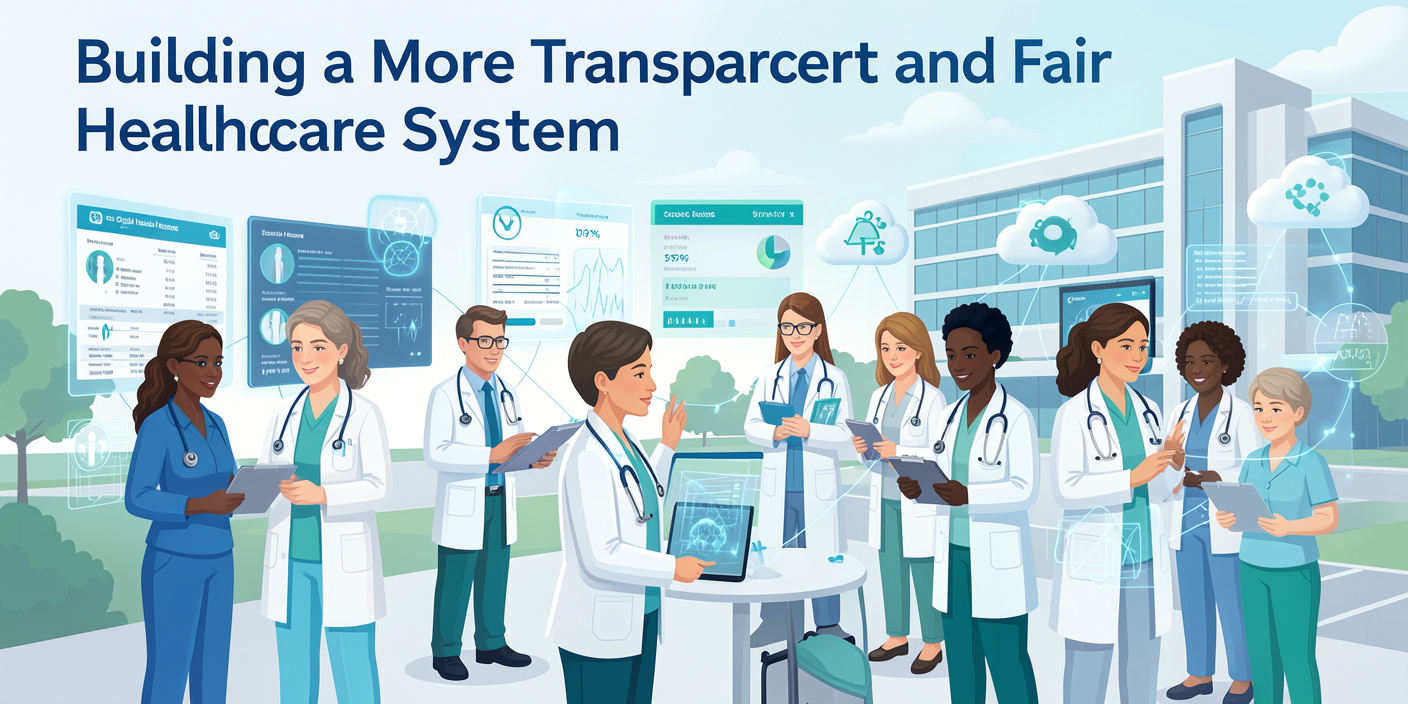
Healthcare costs can often feel difficult to understand. Patients may know the price of a consultation or procedure, yet the final bill can include several additional charges that were not immediately clear. This uncertainty creates frustration for consumers and makes financial planning harder for families and businesses.
Technology is creating an opportunity to change that experience. Digital platforms, data analytics, artificial intelligence, and connected healthcare systems can help providers deliver clearer information before services are received. As a result, clear, fair, and predictable healthcare pricing is becoming an important part of the broader digital transformation taking place across the healthcare ecosystem.
Meanwhile, healthcare organizations are under pressure to improve efficiency while maintaining quality. Better technology can help connect clinical information, administrative processes, insurance data, and pricing systems so that patients receive a more complete picture of potential costs.
How Technology Can Improve Pricing Transparency
Modern healthcare platforms can bring together information from multiple systems and present it through simple digital interfaces. Instead of relying on fragmented paperwork or conversations with several departments, patients can potentially review estimated costs through online portals and mobile applications.
Artificial intelligence can also support more accurate estimates by analyzing historical billing information, treatment patterns, insurance coverage, and other relevant data. However, technology should support transparency rather than make pricing more complicated. A sophisticated system is valuable only when the information it provides is understandable to the person using it.
Moreover, cloud computing is allowing healthcare organizations to connect applications and databases more efficiently. This can improve access to information while helping providers update pricing and coverage details across digital channels.
The Role of Data in Predictable Healthcare Costs
Data has become one of the most important assets in modern healthcare. Providers can analyze historical costs and service utilization to identify patterns that may help improve estimates. Consequently, data driven pricing models can give patients greater visibility into potential expenses.
Predictability is particularly important for procedures that involve multiple healthcare professionals or facilities. A connected digital ecosystem can help bring together information from hospitals, physicians, laboratories, pharmacies, and insurers. This reduces the risk of patients receiving disconnected cost information from different sources.
Additionally, stronger data integration can benefit healthcare organizations themselves. Better visibility into pricing and utilization can support financial planning, resource management, and operational decision making. These developments are closely connected with broader technology insights shaping the healthcare sector.
Artificial Intelligence and Smarter Healthcare Estimates
Artificial intelligence is increasingly being explored for healthcare administration, forecasting, and decision support. One practical opportunity is using AI to improve cost estimates before a patient receives treatment.
AI systems can process large datasets much faster than traditional manual methods. They can identify pricing patterns, compare historical cases, and help organizations provide more relevant estimates. However, accuracy depends heavily on the quality and freshness of the underlying data.
Therefore, healthcare providers need strong governance around AI driven pricing tools. Patients should be able to understand that an estimate is not necessarily a final bill, while organizations should regularly evaluate models for accuracy and fairness.
Digital Healthcare and the Consumer Experience
Patients increasingly expect healthcare experiences to resemble the digital services they use in other industries. Online banking, ecommerce, travel platforms, and subscription services have made consumers comfortable with viewing prices, comparing options, and receiving digital updates.
Healthcare can learn from this shift without treating medical services like ordinary consumer products. Clear pricing information can help patients make informed decisions while preserving the importance of clinical judgment and quality of care.
Similarly, digital payment platforms and automated billing systems can make healthcare transactions easier to understand. Notifications about expected costs, insurance contributions, and outstanding balances can reduce confusion and improve the overall patient experience.
What Healthcare Leaders Can Learn From Other Industries
Healthcare is not the only sector using technology to improve pricing transparency. Finance industry updates frequently highlight the importance of real time information, personalized digital services, and automated financial insights. These ideas can offer useful lessons for healthcare organizations.
Sales strategies and research also demonstrate how better customer data can support personalized experiences. Meanwhile, marketing trends analysis shows how digital platforms can deliver relevant information at the right moment. Healthcare organizations can adapt these principles while maintaining strict privacy, security, and ethical standards.
HR trends and insights provide another useful perspective. Healthcare employers need technology that improves workforce efficiency while reducing administrative workloads. Better systems can allow staff to spend less time managing pricing and billing information manually and more time supporting patients.
Security and Trust Must Remain Central
Greater pricing transparency depends on greater access to healthcare data, but that creates important cybersecurity responsibilities. Healthcare organizations manage highly sensitive personal and financial information, making security a critical part of any digital pricing initiative.
Strong identity management, encryption, access controls, monitoring, and secure cloud infrastructure can help protect patient information. However, technology alone cannot guarantee trust. Organizations also need clear policies explaining how data is collected, processed, stored, and shared.
Furthermore, healthcare leaders must balance personalization with privacy. Patients should benefit from smarter technology without feeling that their personal information is being used without appropriate safeguards.
The Future of Clear and Predictable Healthcare Pricing
The future of clear, fair, and predictable healthcare pricing will depend on how effectively organizations combine technology with transparency and responsible data practices. Digital platforms can make pricing information easier to access, while AI and analytics can improve estimates and operational efficiency.
However, successful transformation will require more than deploying new software. Healthcare providers, insurers, technology companies, and policymakers will need to work toward interoperable systems that allow relevant information to move securely across the healthcare ecosystem.
As digital healthcare matures, patients are likely to expect greater visibility into costs before making important healthcare decisions. Organizations that respond to this expectation can strengthen trust while creating more efficient administrative processes.
Future Technology Insights for Healthcare
Clear, fair, and predictable healthcare pricing is ultimately about giving people better information at the right time. Emerging technologies can make healthcare costs easier to understand, but meaningful progress will depend on combining innovation with responsible governance, accurate data, cybersecurity, and human centered design.
For technology leaders, healthcare providers, and digital innovators, this represents an opportunity to build systems that make the healthcare experience more transparent and financially predictable. As the IT ecosystem continues to evolve, pricing transparency could become an increasingly important measure of digital healthcare maturity.
Explore more expert technology insights and the latest IT industry news at iTechInfoPro.com.
Stay informed about emerging digital innovations and the technologies shaping tomorrow’s healthcare ecosystem.