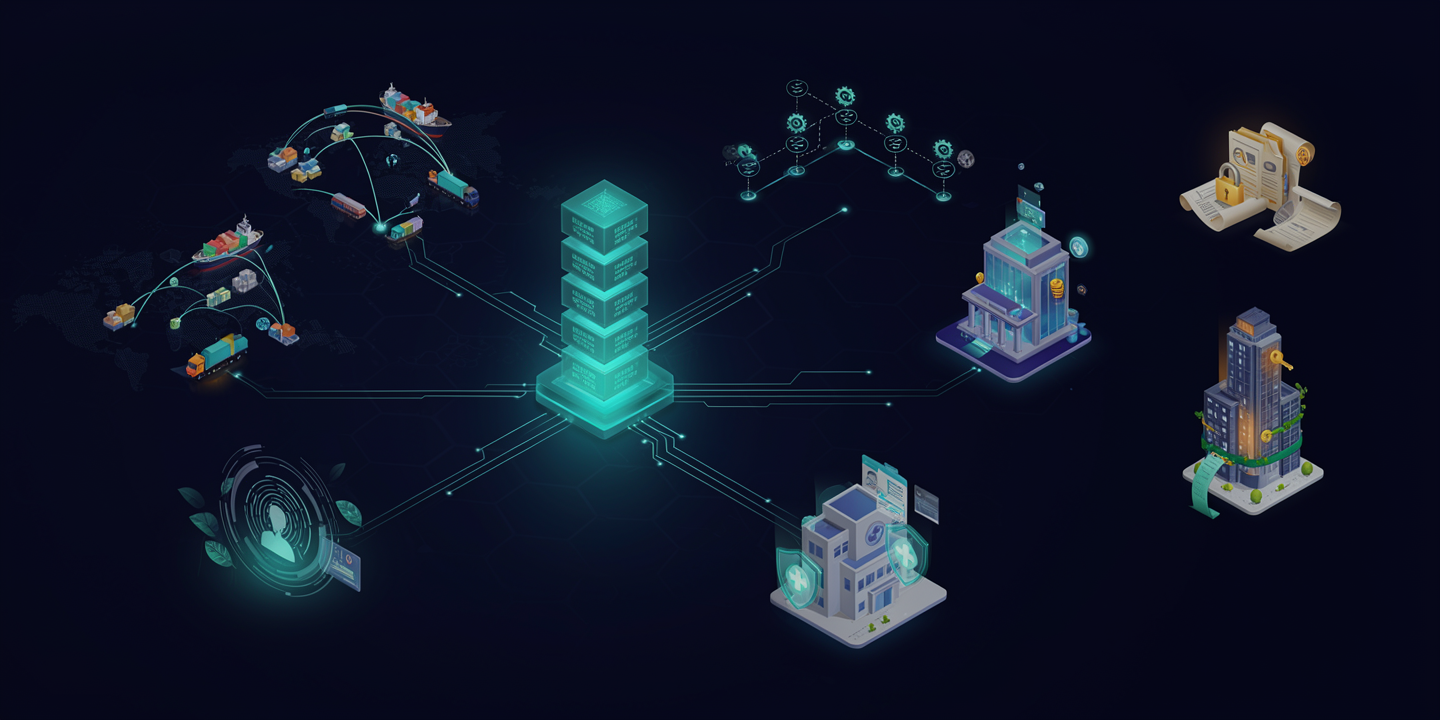
Blockchain technology is often associated with cryptocurrency, but its potential extends far beyond digital coins and financial transactions. Businesses across industries are exploring blockchain to improve transparency, strengthen security, automate processes, and create more reliable digital records.
As organizations continue to adopt digital technologies, blockchain is becoming an important part of discussions around supply chains, payments, identity management, healthcare, intellectual property, and data sharing.
What Is Blockchain?
Blockchain is a distributed digital ledger that records transactions or other types of information across a network. Instead of relying entirely on a single central database, blockchain can allow multiple participants to maintain synchronized records.
Transactions are grouped into blocks and linked together. Depending on the blockchain design, cryptographic techniques and network validation mechanisms can help protect the integrity of the recorded information.
This structure can make blockchain useful when several organizations need to share trusted information without relying on a single party to maintain the entire record.
Blockchain in Supply Chain Management
Supply chain management is one of the most promising business applications of blockchain.
Companies often work with manufacturers, suppliers, distributors, logistics providers, and retailers. Tracking information across these different organizations can be challenging when every participant uses separate systems.
Blockchain can create a shared record of important supply chain events. Businesses can use it to track products from manufacturing through distribution and delivery.
For example, a food company could record information about where products were produced, processed, transported, and delivered. This can improve traceability and help organizations respond more efficiently when quality or compliance problems occur.
Blockchain for Financial Services
Financial services remain an important area for blockchain innovation even outside cryptocurrency.
Banks and financial institutions can explore blockchain for transaction settlement, cross-border payments, trade finance, asset management, and recordkeeping.
Traditional financial processes can involve multiple intermediaries and reconciliation steps. Blockchain-based systems may help reduce duplication and improve the speed at which participants verify shared information.
The technology can also support tokenization, where certain real-world or digital assets are represented digitally on a blockchain.
Smart Contracts and Business Automation
Smart contracts are programs that automatically execute predefined actions when specified conditions are met.
For businesses, this can create opportunities to automate agreements and workflows.
For example, a logistics company could use a smart contract to trigger a payment after a delivery is verified. An insurance organization could potentially automate parts of a claims process when predefined conditions are satisfied.
Smart contracts do not eliminate the need for legal agreements or business controls, but they can help automate specific operational processes.
Blockchain in Healthcare
Healthcare organizations manage large amounts of sensitive information involving patients, providers, laboratories, insurers, and pharmaceutical companies.
Blockchain could support secure data-sharing frameworks, medical credential verification, pharmaceutical traceability, and audit trails.
Rather than placing complete medical records directly on a blockchain, organizations can use blockchain-based systems to record permissions, verification information, or references to data stored elsewhere.
This approach can help maintain data integrity while supporting controlled access to sensitive information.
Digital Identity Management
Digital identity is another area where blockchain can provide business value.
Organizations frequently need to verify identities for onboarding, financial services, employee access, customer accounts, and online transactions.
Blockchain-based identity solutions can potentially give individuals greater control over verified credentials while allowing organizations to validate information without repeatedly collecting the same documents.
This can improve efficiency while reducing some of the risks associated with fragmented identity systems.
Blockchain in Real Estate
Real estate transactions can involve buyers, sellers, brokers, banks, legal professionals, government agencies, and other stakeholders.
Blockchain can support digital property records, transaction histories, document verification, and asset tokenization.
Tokenization could allow ownership interests in certain assets to be represented digitally, potentially creating new models for investment and asset management.
However, successful implementation requires integration with legal frameworks and existing property-record systems.
Blockchain for Intellectual Property
Businesses depend on intellectual property such as patents, trademarks, copyrights, designs, and original digital content.
Blockchain can provide timestamped records that help establish when certain digital information was registered or recorded.
For creators and organizations, blockchain-based records could support ownership verification, licensing workflows, and rights management.
The technology does not automatically determine legal ownership, but it can provide an additional layer of evidence and transparency.
Blockchain and Data Security
Blockchain’s distributed architecture and cryptographic mechanisms can contribute to data integrity. Once information is recorded under an appropriate blockchain design, unauthorized alteration can be more difficult to perform without detection.
This makes blockchain potentially useful for applications where organizations need reliable audit trails.
However, blockchain should not be viewed as a universal cybersecurity solution. Poorly designed applications, compromised credentials, vulnerable smart contracts, or insecure systems surrounding the blockchain can still create significant risks.
Benefits of Blockchain for Businesses
The business value of blockchain can include improved transparency, better traceability, shared data integrity, process automation, and reduced reconciliation between organizations.
It can be particularly useful when multiple independent parties need access to the same trusted information.
At the same time, organizations need to evaluate whether blockchain is actually necessary. A conventional centralized database may be faster, cheaper, and easier to manage when one trusted organization controls the data and there is no requirement for shared governance.
Challenges of Business Blockchain Adoption
Blockchain adoption also comes with challenges.
Organizations must consider scalability, transaction costs, regulatory requirements, interoperability, privacy, governance, and integration with existing technology.
Another important challenge is determining who controls the network and how participants agree on changes. Enterprise blockchain projects therefore require technical planning as well as organizational and legal considerations.
Businesses should begin with clearly defined problems rather than adopting blockchain simply because the technology is gaining attention.
The Future of Blockchain in Business
Blockchain is gradually evolving from a technology strongly associated with cryptocurrency into a broader infrastructure concept for digital trust and shared records.
As businesses explore tokenization, smart contracts, decentralized identity, supply chain visibility, and secure data exchange, blockchain may become part of larger digital transformation strategies.
Its long-term success will depend on practical business value, regulatory clarity, interoperability, usability, and the ability to integrate with existing enterprise systems.
Conclusion
Blockchain has applications far beyond cryptocurrency. From supply chain management and financial services to healthcare, digital identity, real estate, and intellectual property, businesses can use blockchain to create more transparent and trusted digital processes.
However, blockchain is not the right solution for every business problem. Organizations should evaluate the technology based on their specific requirements, data architecture, regulatory environment, and operational goals.
When applied to the right use cases, blockchain can become a valuable technology for improving trust, transparency, automation, and collaboration across modern business ecosystems.
Stay informed with the latest technology insights and expert industry analysis at iTechInfoPro.com.