
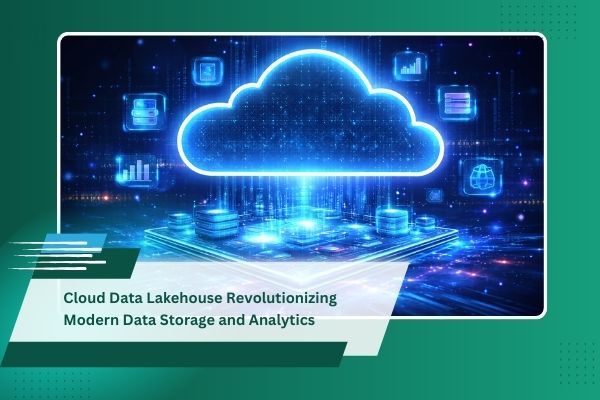
In the evolving world of data management, organizations are constantly searching for solutions that provide both flexibility and performance. The Cloud Data Lakehouse is emerging as a modern architecture that combines the best aspects of data lakes and data warehouses. It enables businesses to store structured and unstructured data while ensuring analytical capabilities remain strong. By adopting a Cloud Data Lakehouse, enterprises can simplify their data ecosystem and accelerate decision-making processes.
How Cloud Data Lakehouse Integrates Data Lakes and Warehouses
Traditionally, companies relied on data lakes to store raw, unstructured data and data warehouses for structured, high-performance analytics. This dual system often created inefficiencies, requiring complex ETL pipelines to move data between platforms. A Cloud Data Lakehouse bridges this gap by allowing organizations to store all types of data in a single environment while supporting advanced analytical queries. This integration reduces latency, lowers costs, and provides a seamless data experience for business intelligence and reporting teams.
Benefits of Cloud Data Lakehouse
The Cloud Data Lakehouse offers numerous benefits that make it attractive for modern enterprises. It allows flexible storage of diverse data types such as log files, multimedia content, and relational tables. Advanced query engines provide analytics performance comparable to traditional warehouses without compromising speed. Cloud deployment further enhances scalability, enabling businesses to expand storage and computing resources on demand, avoiding heavy upfront infrastructure costs. Additionally, Cloud Data Lakehouse platforms often include features such as automated data governance, security, and compliance tools, ensuring enterprise data remains reliable and protected.
Enabling Real-Time Analytics with Cloud Data Lakehouse
Real-time data processing is a growing requirement in industries where immediate insights drive competitive advantage. Cloud Data Lakehouse architectures support streaming data, enabling organizations to analyze events as they happen. By integrating real-time analytics with traditional batch processing, businesses gain a comprehensive view of operations. This capability empowers industries such as e-commerce, finance, and manufacturing to respond quickly to trends, optimize performance, and enhance customer experiences.
Cost Efficiency and Cloud Data Lakehouse
Adopting a Cloud Data Lakehouse can result in significant cost savings compared to maintaining separate data lakes and warehouses. By consolidating infrastructure, organizations reduce operational overhead and simplify management. Cloud providers typically offer pay-as-you-go models, allowing businesses to scale compute and storage resources according to demand. This approach ensures that enterprises only pay for what they use while still gaining access to high-performance analytics and flexible data storage.
Supporting Advanced Machine Learning
The Cloud Data Lakehouse is particularly beneficial for organizations leveraging machine learning and AI. By providing centralized access to large volumes of diverse data, data scientists and analysts can build more accurate models. Machine learning workflows benefit from the ability to query raw data directly while also taking advantage of structured datasets for training and evaluation. This integration accelerates model development and improves predictive capabilities across various business domains.
Ensuring Data Governance and Compliance
Maintaining data quality, security, and compliance is critical in modern enterprises. A Cloud Data Lakehouse offers integrated governance features that monitor data lineage, enforce access controls, and ensure regulatory compliance. These built-in capabilities simplify auditing and reporting processes while reducing the risk of data breaches. Organizations can confidently scale their data operations, knowing that governance and security remain a priority.
Future Trends in Cloud Data Lakehouse
The adoption of Cloud Data Lakehouse is expected to grow as businesses seek more unified and efficient data architectures. Emerging trends include tighter integration with AI-powered analytics, serverless computing options, and hybrid multi-cloud deployments. Organizations are increasingly leveraging Cloud Data Lakehouse to drive digital transformation initiatives, enabling smarter decision-making, enhanced operational efficiency, and improved customer engagement.
Driving Business Intelligence and Strategy
By consolidating data and analytics capabilities into a single platform, a Cloud Data Lakehouse empowers organizations to make data-driven decisions faster. Business leaders gain deeper insights from real-time and historical data without managing multiple disparate systems. This unified approach enhances agility, supports innovation, and provides a competitive edge in rapidly evolving markets.
ITechinfopro provides essential content, insights, analysis, and references to guide business technology leaders in making informed purchasing decisions.